Category Archives: runes

C is for Cenaz

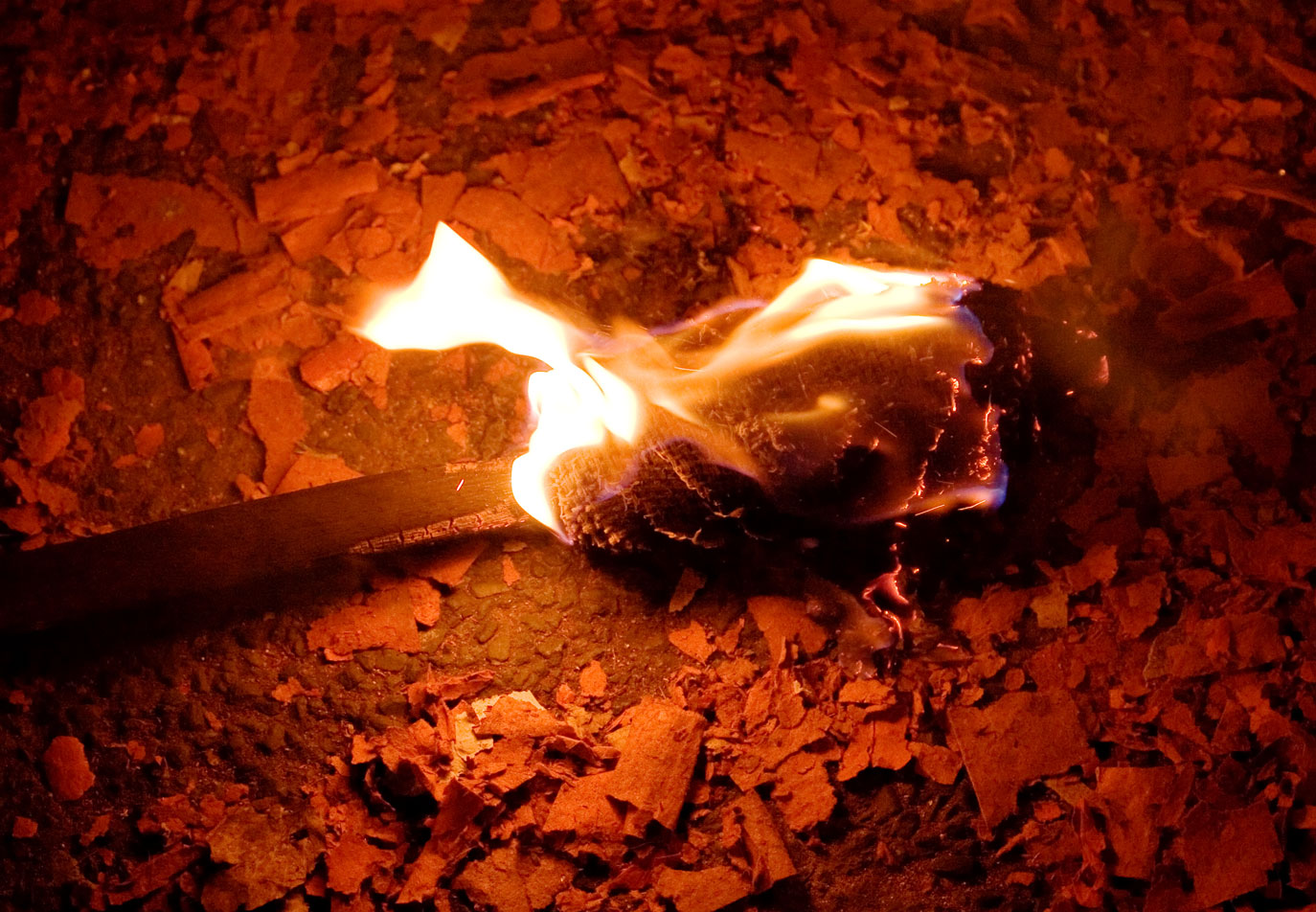
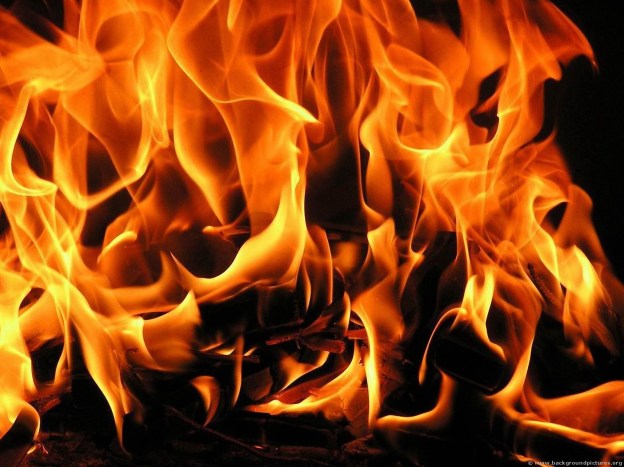
Lewes_Bonfire,_discarded_torch

The rune I like to attribute for the letter C is Cenaz, or just Cen. The symbolism associated with Cenaz is the torch, a piece of wood or metal, that often has some kind of extra fuel source attached to one end, with that fuel source is often some kind of textile that has been soaked in some kind of accelerant or flammable chemical. This allows the torch to be carried around to shed firelight in dark places, either inside buildings that didn’t have windows (and thus no natural light) or in caverns.

As indicated by the symbolism of a torch, this rune is about fire, and light, and things being revealed. In this case though, this is the fire that has been tamed by humanity (unlike qweorth), the light that is wielded by humanity (unlike sowilo), and what is revealed is what is sought by humanity. This colors my interpretation of Cenaz as being the light and fire of humanity, our inspiration, our drive, our passions, that which makes us burn, ignite and shine. While a common symbol for learning, knowledge and education is the lit oil lamp, a symbol that is very Mediterranean, the northern European equivalent would be the torch. You could also extend it to the forge as well, as that is the fire that is harnessed and controlled to create and make things for use by humanity, from basic metal tools to weapons. But that flame is also metaphorical, the flame of passion, the fires of creativity, that spark of an inspiration that sets people on the path to making, making anything from prose to computers.

As I’m writing this, I’m alternating with videos on YouTube, and it occurred to me that these things, music videos, lectures, comedic gags, are that spark of Cenaz at work. Someone had that idea of creating something that would be filmed and made into a video, to express something, or share information that is important to them, or even just to create a laugh, a moment of joyous catharsis. The flame of Cenaz is shining there, revealing something from the creator, but also revealing something to the audience.

My own experience of the spirit of Cenaz was that he was a slim figure, with bright red hair and pale skin, with features like fantasy elves. He was elegant, but crafty and clever and quick with words.

A ritual for Cenaz

what you’ll need
-a red candle
-a candle holder
-any kind of oil that is scented with cinnamon
-a small slip of paper
-red pen

take the slip of paper, and with the red pen, draw the Cenaz rune on it. Then take the red candle, and with a metal implement (pin, needle, nail) carve a Cenaz rune also into it. Anoint the candle with the chosen oil. Some options could be Fast Luck, or Abramelin oil, or a personally made oil that uses cinnamon. Place the candle in the holder, and set the holder on top of the paper. Light the candle, and as it burns chant to your self the name of the rune Cenaz (the C is a hard “k” sound) 9 times. Imagine the flame of the candle beaming it’s light into your eyes and our third eye, and that light sparks a flame inside you. That flame reveals things inside you, revealing your passions, revealing ideas and thoughts for things to do and make, revealing artistic pursuits of all kinds, to forgotten knowledge, events or memories that could be of a benefit to you know. Do this for about 15 minutes. Then snuff the candle with your fingers or a candle snuffer. Repeat this for 7 days in 15 minute increments, until the last day when you should let the candle burn out completely, although before you do so, take the paper form underneath, and burn it in the flame, putting into a fire safe container to burn until it is consumed. Dispose of the ashes by the entrance to your home or building of residence.

B is for Berkana

Because I spent I good deal of time talking about two other runes that relate to trees, it only feels appropriate that the only B rune should be talked about.

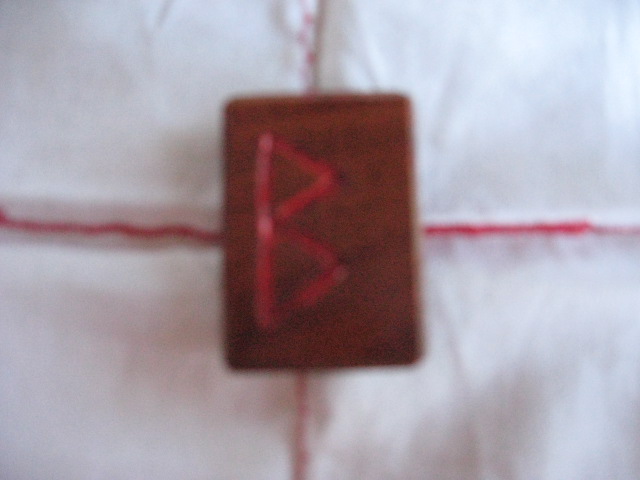
Berkana

Berkana is often translated as birch, a tree that most people are probably passingly familiar with. It has white bark, which often is seen peeling off during certain parts of the year, which seems similar to some kinds of paper, and in fact people did use to write on birch bark for somethings and probably still do, I think it is the white bark of most birch trees that probably stands out the most in my mind, as that much stark lack of color is very distinct, especially when it is off set with many green leaves.
birch-tree1
The esoteric symbolism of birch and berkana is what is usually focused on. The meanings that I have always ascribed to it is growth, healing, nurturing, becoming, life changes, and liberation. My own meditations and journeys with this rune have pointed to the powerful feminine influence. My own experience of the spirit of Berkana is as the Birch mother, female spirit with pale skin and green hair, who dwells in a endless forest of birch, with light shimmering through the leaves of the forest.

In part of the tree pattern that seems apparent in the runes, Berkana is the world tree as the generative, creative aspect. In the history of the world, the birch was the first tree to emerge in open areas, quickly turning an area that was an open meadow into a forest, and as the glaciers retreated further north, birch trees would continue to follow, while other trees may then fill in the areas that had once been filled with birch. In the Anglo-Saxon rune poem, it is even described as just growing from suckers that the parent tree spread from it. Although now days research has shown that is not actually a birch tree or a member of the betula family, the concept of prodigous generative power carries forward in the rune.

Fascination and the Aegishjalmur


The power of fascination or enchantment is one of the more commonly given powers associated with practitioners of magic.  Yet, it seems to be the least mentioned ability in many books dealing with magic.  The only sources that I have yet to find that deal with it are Agrippa (in his classic 3 books) Paul Huson in Mastering Witchcraft, and Jason Miller in the Sorcerer’s Secrets.  It is such a useful technique; it is surprising that so many people seem to ignore it.


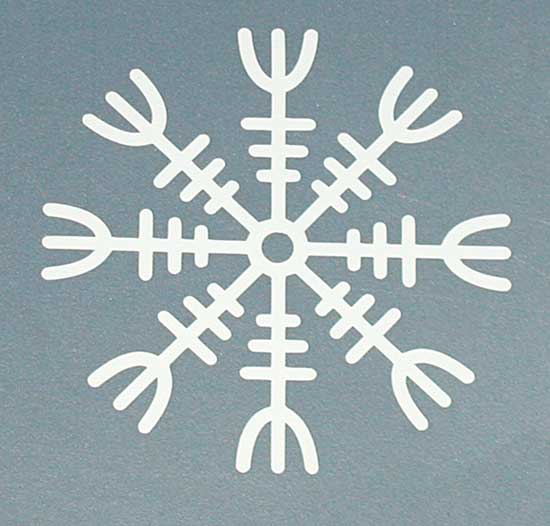
For myself, I have found that the aegishjalmur, or the helm of awe (or terror), is a most useful symbol in working this kind of magic, both in a general way and in working with the specific application when interacting with a specific person.  I also combine the aegishjalmur with the ideas and techniques presented by the three authors above, so it makes it a pretty effective tool in my bag of tricks.


When you are first starting out, I highly recommend actual putting the aegishjalmur on your forehead.  A method described in the galdrabok indicates doing so with your own spit, so work up a good mouthful of saliva (you’ll need it) and using your left index finger, put the aegishjalmur on your forehead. It’s not going to be perfect, so don’t try to make it that way. When you are finished, press your index finger into the center of the symbol and say:


“The helm of awe is upon my brow. Let all strife be stemmed, let all wrath be run away, Let all people look upon me with favor, as the Lady looks upon the Lord with favor and may the world and land be gracious as friends.”


Channel some ond into the symbol and then continue on about your day.  You could also use an appropriate condition oil to put the symbol on your forehead, but I find that makes me break out, and having facial blemishes doesn’t really help one in social interaction.


This is the basic set-up for working with the aegishjalmur and using it for persuasion and influence. When it comes time to work on someone specifically, well, you should already have done this.  When you find yourself entering into a situation where you want the influence of the helm, start channeling ond into the figure on your forehead.  Feel it light up with energy, and start glowing, and that glow starts to wrap itself around you. As you continue to power it, you should also start to feel it acting upon the third eye and perhaps feel ond flow into the subtle channels of the eyes from there.  I find that with fascination, eye contact is important.  The ond that will radiate from the eyes will carry emotions and desires with it, and for it to “hit” it needs to meet the eyes of the desired target.  So, make eye contact.  Often times the eye contact will instantly get the attention of the target once it is made, because in this day and age it seems eye contact is something that many people avoid.  Depending upon how you want to influence the target, try and keep your face relaxed but  following the general intention, i.e., try a subtle smile (practice it) if you are trying to entice the person, and do a subtle frown or tighten your jaw a little if you’re trying to intimidate the target.

Once you have the target’s gaze (even if for a second) then continue to move forward.  Play a game of cat and mouse, where you are present, but just out of reach.  Talk to them briefly, but then indicate you need to go elsewhere (to friends, refresh your drink) to give them space, but then return after a few minutes.  If you find the opportunity presents itself, give them an acceptable and friendly touch.  The touch should also be charged with ond and your intention, whether it is a handshake or an “accidental” tap with the elbow against their elbow or arm.  Of course, if all is going well, they should be paying rapt attention to you, and find ignoring your difficult.  If your goal is to get into close contact/quarters with the target, once that occurs, start delivering ond with your breath, your gaze and your touch, all channeled through the helm of awe.

Runes of Love

IMG_0001

Love spells! Everyone wants love spells. When it comes to doing magic, often time when clients come many a reader, sorcerer or spiritual worker, they are looking for love, either to get new love, re-gain love that has been lost, or move a current love into a new situation, such as marriage. Of course, part of the field of Love spells, also includes spells that promote harmony among people, from married couples to families and communities.
It often seems to me that Love magic is the ignored part of working with runes. Maybe a footnote here, or a value given there, but in many books dealing with runes and rune magic, Love is often overlooked, although that maybe the prior trend of the “unpopularity” of love magic with the Neo-pagan movement. However, it’s pretty clear from some surviving written lore, that spells that promote love and harmony were definitely part of the Northern Tradition. I would like to turn to the Havamal in this case, and the runes described by the speaker.

The first stanza that identifies a spell dealing with promoting love (or in this case harmony) is the stanza of the eigth rune:

An eighth I know: which all can sing
for their weal if they learn it well;
where hate shall wax ‘mid the warrior sons,
I can calm it soon with that song

Where the hate and conflict among kin can be soothed through singers magic skill. The second stanza identifying love magic is the sixteenth rune:

A sixteenth I know: when all sweetness and love
I would win from some artful wench,
her heart I turn, and the whole mind change
of that fair-armed lady I love.
And the seventeenth:
A seventeenth I know: so that e’en the shy maiden
is slow to shun my love.
Being the clearest examples of what is recognized as love magic. Of course the singer indicates his mastery in the this art, as he is able to win the love of not only other skillful women, but even young shy women who are often harder to obtain.
To this end, I looked to the runes, seeking and identifying which runes resonate with the powers of love, harmony, and relationships. With my research I identified nine runes, which can be worked, separately or together, in master the arts of love magic.

In the ordering of the futhorc aettirs, the first rune identified is Kenaz. Kenaz, the torch, is the fires of passion. They ignite the feeling inside, a flame that reveals the desires, but also burns. The burning passion leaves little peace, until they have been satiated.
The next rune is Gebo. In Gebo we see the exchange of relationships, partnerships, the agreements, the contracts, the idea of dowry, union of people and the rules that govern that union. Gebo is the most unromantic side of love magic, the side that comes after “and they all lived happily ever after” which people often want to forget. It is having the skills in this side that make relationships succeed or fail, and being able to manage the give and take successfully will often help in being successful in whatever partnership is entered into.
The third rune of love is Wunjo. Joy is it’s name, and joy can be a wonderful, if temporal thing. This is one of the first runes I identify with harmony among people, although in this case it is usually familial harmony. The conflicts between spouses, between parents and children, between siblings, can all create a very unharmonious and dissonant environment. Wunjo is the joy and peace of happy family, and a happy familial home. It’s dark side can be the grasping for this temporal thing. When everything is sacrified, just so that one can maintain the illusion that life is free from strife, the grasping for joy can become a toxic quest, and the peace is shallow, and soon shattered.
Interestingly enough, a whole aettir is skipped here. I studied this for a while, but part of my understanding of the second aettir, the aettir of Hagal, is that it is the runes of warrior, and conflict. While there are runes here that might be useful in influence and command (which has sometimes role in the world of love spells) they are not really concerned with love per se, but with having influence over other people, to any end.
The fourth rune is Berkana. In Berkana is the love of a mother for it’s child in sense. It is nurturing, supportive, and steady. It is also powerfully feminine, which can be somewhat hard to describe exactly how. It is the rune of Women, and express the powers of women, not just girly, but also Amazonian. The mysteries of Women who Love Women are found in this rune, which has it’s own draw, but it can also be used by women to draw whatever kind of love they desire, especially when combined with other runes, or to heal a womans sexual nature, if it has been damaged or cursed.
The fifth rune is Mannaz. In Maanaz, there is the coming together of equals, or rather the marriage of equals. While the rules of marriage belong to Gebo, means of relating to each other are found in Mannaz. This marriage of equals also governs friendship, the brother and sister-hood of humanity. This rune promotes the harmony of whole communities, but also individual people. This is love without lust, just a simple affection, which flows out from within. The idea that comes to me is that deep within each person, there is Love, and when this love is allowed to expressed freely, without expectation of return, or demands, is when people can get along innocently.

The sixth rune is Inguz. As Berkana is to feminity, Inguz is to masculinity. It is a great power, that lies dormant, until it is triggered and released, bring strength and setting change in motion. It can be aggressive and rough when needed, but mostly it is strong and solid. It is the rune of Men and in many ways directly relates to the phallus. It is not only the usual masculine stereotype, but also the gentle man, who can be strong, but sensitive. It also contains the mysteries of Men who Love Men, but it can be used by all men to attract Love, and also sex. It can also helping curing the damaged sexual nature of men, whatever their orientation.
The seventh rune is Ac, the mighty Oak tree. In the permanence and endurance of Ac is fidelity, the ability to stay the course and endure the trials of Love. While many love spells used to promote fidelity were the domain of women who livelihood often depended upon the fidelity of their husbands, who if they could get to stay at home night, at least to make sure they come home when they are done. Fidelity is also about staying together, “for richer or poorer, in sickness and in health.” Sometimes the stress of living can sow the seeds of discontent between partnered couples, and it may take the patience of the partners to rise above their own trials, and embrace their partner(s). In exchange, it also buries jealousy, as I was taught growing up that “jealousy is the grave of affection” and being able to stand fast by your partner, when perhaps they are succeeding, and your own efforts are impeded or faltering can be a difficult thing.
The eighth rune is Ior. Ior is the rune of boundaries and finding happiness within those boundaries. Sometimes, that happiness is found by transgressing what is perceived as binding us, but sometimes it is also recognizing that boundary helps us to nurture ourselves and find our own happiness, wherever it maybe. Happiness is an amorphous thing, and constantly changes. What feeds your happiness today, is not what fed your happiness yesterday, and may not sustain your happiness tomorrow. Being able to change, adapt, and move between environments, elements, or even worlds is a survival skill, that opens up opportunities to find new resources that can sustain you.

The ninth rune is Khalk. Khalk is the cup of desires, the loving cup which contains all that one can want. Contained within the wondrous draught is the fulfillment of our hearts content, yet the difficult part is getting the drink. It can show you what it is you really seek, from this person, from this relationship, from this moment, but it can also make you that which is sought. Glamor was the popular word used for such thing, the magical gilding which brings out the best in each person, showing them as the desired prize, yet keeping it just unattainable enough that they want it all the more. Khalk proves the desire is not about being the best looking, but having the confidence to show your worth.

Having worked with these runes in love magic over the past couple of weeks, I can tell you, yeah it works, quite well. My first experiment was working with each rune, to see how they would manifest. Over the course of nine days, combining the runes with other love-drawing methods (red candles, condition oils, and galdr) those nine days were some of the more interesting escapades in love that I have had.

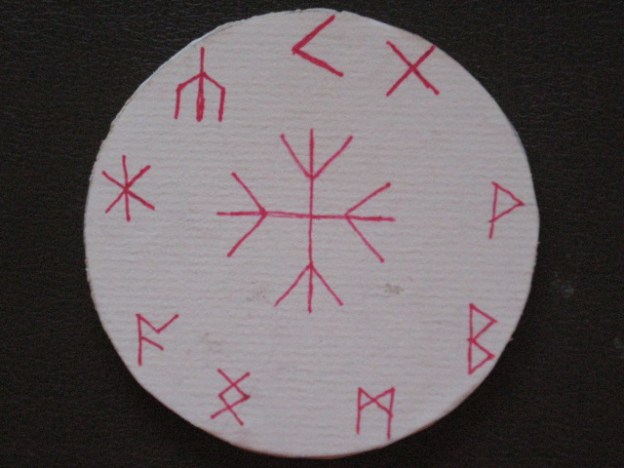
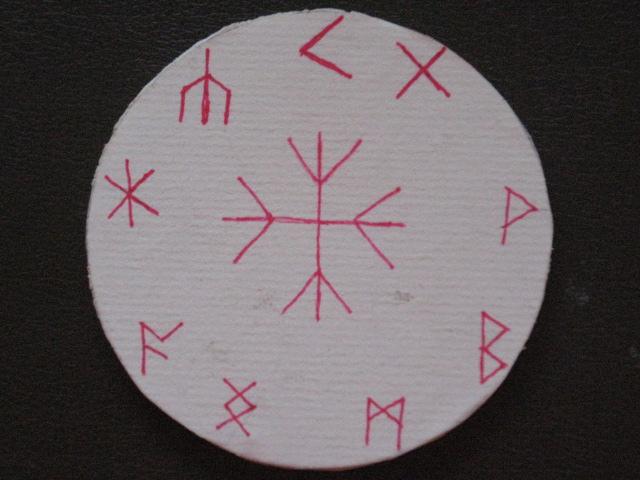
The image with this post is a Love rune talism that I created when working with this, a simple disc with the runes inscribe in a circle around. The image in the middle is an aegishjalmur described in the Icelandic grimoire, that will get you the love of the person you desire.
Aegishjalmur

aegishjalmur

The Aegishjalmur or Helm of Awe is probably one of my favorite symbols from the Northern Tradition. It is one of the magical signs that have many forms and seems to appear often, especially in the Icelandic galdrbok as a means to gain many things, from stilling anger, to winning love, or just having the favor of men or removing anger. Some variants are very simple images, others are as complex as solomonic and goetic talismans in their imagery. I personally have a preference for the simpler ones, mainly because they are much easier to inscribe on a multitude of surfaces.

The helm of awe is even mentioned in the sagas, probably the most famous saga, The Volsungasaga. The dwarf turned dragon, Fafnir, bears a helm of awe, which is one of the means that he keeps his suspected foes away from the treasure that he has accumulated.

Later, in the galdrbok tradition, it is suggested that the aegishjalmur symbol be made into lead and pressed between the brows, or using spit, drawn on the forehead. One version has an incantation that reads

“It is the helm of awe that I bear between my eyes-wrath runs away, strife is stemmed. May every mother be delighted with me as Maria was delighted with her blessed son when she found him on the rock of victory, in the name of the Father, and the Son, and the Holy Spirit” followed by “ Olvir, Odhinn, Evil One/ All will you bewitch! / May God himself, with skill/ Send love between us two!”

This was used to still wrath, but also could be used to bring love.

A variant aegishjlamur was named Solomon’s Insigli aka Solomon’s sign and was used for protection.

The main purpose of the Helm of Awe in my works is for success, victory, mastery and favor. You could use spit and other traditional means to place it upon your brow, but you can also use relevant condition oils (such as Crown of Success, Master or High John the Conqueror).

A simple Aegishjalmur spell for success could consist of the following:

A yellow candle (for success, victory and favor)
Crown of Success condition oil
Crown of Success sachet powder
Crown of Success incense
A piece of paper (parchment paper or hand torn brown paper)
A red pen
A pin or needle
Quick lighting charcoal
Incense holder

Light your charcoal.

Take the piece of paper, and using the red pen, draw the aegishjalmur symbol on the piece of paper. Sprinkle a small amount of sachet powder on the paper and symbol, and then retrace the symbol with your left index finger. When you finish, snap the paper to remove the sachet powder.

Take the yellow candle. With the pin or needle, carve the aegishjalmur symbol into the candle. Dress the candle with Crown of Success oil, and place it over the symbol and paper. Put some incense on the charcoal. As it is smoking, using spit or oil, make the draw the aegishjalmur on your forehead, when completed say:

“The Helm of awe is upon my brow. Let all people look upon me and hear my words with favor, as the Lord looked upon his creation with favor, that I may succeed in all my works. So It is!

Light the candle and let the candle burn down to completion. After it has burned out, carry the paper with you in your wallet or purse, as talisman for success and favor. If you desire, you can take the talisman and press the symbol to your forehead and repeat your incantation, while you are out to strengthen the aegishjalmur.

Runes of Air

The element of air is not very apparent in the natal cosmology that the runes sprang from. It is just kind of there, and everything that inhabits it comes about later. For that reason, there is very little clear relation to the element of air in the runes, although using some investigation it is possible to make connections between some of them.

In various books about runes, you will find some of the following runes listed as connected to the element of air. They are:

Os/Ansuz, Raidho, Gebo, Eohlx/Algiz/Elhaz, Tiewaz, Mannaz and Yr

Some of these are related esoteric symbolism (like Eohlx which quite a few relate to Valkyries, which fly about in the air, or Mannaz which has connections to the mind and thus the mind/intellect/air connection). Others are directly related like Os/Ansuz which is about the mouth, and thus the movement of breath through the human body. Tiewaz could also fall in this category as it’s rune poem reference both mists of night but also the means to be guided through them, IE the stars in the heaven.

For myself, I have a slight longer list of runes, based on a greater perception of what makes up interaction and relationship with air and both it’s physical and esoteric qualities.

Here is my own list.

Thurisaz, Os, Raidho, Wunjo, Nauthiz, Jera, Iehwaz, Eohlx Tiewaz, Ehwaz, Mannaz, Dagaz, Aesc

I attribute Thurisaz because of the associations it has with violence and misfortune, but also with power. It is a fickle rune, and so Air is a fickle element. It is not always the gentle breeze, but sometimes the terrible storm and hurricane. It can be the breath of life, or the poisonous gas that takes life away.

Os is given because it is the mouth, and the words that come from it, bringing wisdom or folly. It also connects to breath, and to song.

Raidho is given because it is the traveling and wandering nature, always moving, always restless. In most forms of travel is is always good to have the wind at your back.

Wunjo mainly because of the sound of the name. It just sounds windy and airy. I can also see an symbolism in the comforts, the joy, the deep breath of calm and relaxation in prosperity and ease.

Nauthiz I give for reasons similar to Thurisaz. The challenges and obstacles of need are often symbolized by the power of air and it’s challenges, but also the method of resolving them lies in the preparation by planning and mindfulness, which can help to overcome them

Jera I establish because of the rune poem mentions the King of Heaven. While it could be a reference to Christianity. The idea of harvest, season and summer and the warm air and light that fills it as blessings from Heaven and thus being communicated through the air. This also just adds to the complexity of this rune.

Iehwaz, the yew tree, is another one of those mysterious and complex runes. While I don’t give all the trees mentioned in the runes to Air, there is a connection I feel that comes from the high reaching branches of trees to reach up. Yew also being identified as one of the trees of Yggdrasil, which reaches from the underworlds up into the heavenly realms.

Eohlx I also give as an air rune because of it’s potentially violent power, as the rune poem mentions the elk grass as being able to cut people who handle it roughly. Air also lends itself to protective magic that is more aligned with the watchful guarding nature of Eohlx

Tiewaz I give for the reasons already given above. Stars, mists, and the wisdom and guidance that Tiewaz imparts

Ehwaz is the other side of the moving runes. Instead of the wandering nature of Raidho, Ehwaz is the fast paced speed of movement. It is more direct and blunt then Raidho, because it channels everything into the direction it is moving to get there quickly. It also has symbolism to loyalty and trust, what I see as the ideals of air.

Mannaz as the rune of the mind, and also of friendship and connection based upon the rune poem. It also has the tragic element of the absolute end of all connections, death, which I see as the ability of the mind to contemplate all things and thus be prepared to deal with all events.

Dagaz as the rune of Day, while it is strongly a rune of light, it is also the medium which light passes through, namely air and the bright airs of daytime which serves to inspire hope and happiness.

Aesc the ash tree, another world tree, but this one I associate with the upper worlds. The ash grows high, and the particular powers of this rune seem to be about inspiration and enthusiasm, the descending powers of the gods as they flow into us, bringing prophecy, insight and perhaps madness. It is a rune that connects to the Divine Mind, the Nous or Wod, and be filled with divine possession.

As I indicated before, Air is one of those invisible elements in the northern cosmology. It is always present and yet never really talked about or focused on. Only in it’s particular manifestations as winds or breath, mists or odors does it make itself known. Finding runes of air is a challenge, as it requires interpreting symbolism and meaning and application in many ways of what air can symbolize, how it flows and acts, and it’s deeper esoteric possibilities.

Runes and reversals 2

In my work with bindrunes, using runecasting as the means for selecting runes to use in creating a bindrune, in some of my work I have been given the reversed forms to incorporate. The first time this happened, my initial inclination was to turn the rune right side up. After a several minutes contemplating this, I changed my mind and turn the rune back the way it had come up in the reading, and proceeded with creating the bindrune into the aesthetically pleasing sigil I wanted. Since then, many of my bindrunes have incorporated reversed runes in thier makeup. At first I wasn’t sure what it may indicate, but as time and experience progressed, I slowly came to realization. It has to do with the action of the rune and where it is being activated. This is different from in a reading, although understanding it might help make some things more clear in a reading.

This first became clear to me when I was creating a bindrune to find hidden treasure. Finding hidden treasure is of great interest in much European and American folklore. Long before banks were common and established as mostly trustworthy institutions… People protected their money and valuables through concealment, often through burying them where only they would find it, so long as their secret was not revealed. The problem is that sometimes before they could recover their valuables, the person might die from various circumstances, or without documentation they also forgot where they concealed their wealth. It seemed interesting to me that something like this exists, and yet there is no real modern day interest in this action, except for various treasure hunters who seek out a multitude of technological toys to assist them. Of course, in this day and age, hidden treasure might take on a different meaning. From family bank accounts that were forgotten or lost because of bank foreclosures, to finding out that grandpa’s old clock is a $5,000 art piece to the right collector, to the right bit of information that suddenly puts laws and regulations in your favor, hidden treasure can take many forms.

I thought I would try this out, so I created a bindrune to work with in finding “hidden treasure.” In the process of casting the runes for this, one of the runes that came up was Feoh reversed, the rune of wealth upside down. That is when it dawned on me, “Duh, of course, Hidden Wealth, would be Feoh reversed.” From that insight, the rest of the pieces fell into place for other reversed runes in the bindrunes. They can point to an interior aspect, of the magic of changing the energies within you or a situation. It can also point to powers that are acting discretely, cause sometimes charging in head first, guns blazing is quick way to get your request denied, whereas choosing to grease the palm of the bouncer to get in the back can be more successful. It is something that I have happily embraced with my rune magic, but it has also been a great boon in readings to, as sometimes the layout of runes in the reading indicates that hidden aspect of a reversed rune, instead of a misfortunate meaning.

Runes of Fire

Fire elemental power can be seen in different ways, which include and exclude various runes depending upon the way it is perceived. In some of the earlier works about runes, the following runes were given the qualities of fire:

Feoh (primal fire), thurisaz (destructive fire), kenaz (helpful and illuminating fire), nauthiz (needfire), sowelo (sun), dagaz(daylight)

Another method of looking for the qualities of fire is by referencing the various rune poems, for example, in the Anglo-Saxon rune poems the following runes mention fire or flame or flame producing items

Kenaz, (the torch) Eihwaz (a guardian of flame) and qweorth (the fire twirl)

These two are the most common methods by most people of connecting with fire through the runes. After spending some time in contemplationg on this, I came to a third conclusion. The runes of fire by quality. In this case, it has to do with the qualities of fire. Things like radiance, heat, light, will, passion, destruction, are all qualities of fire, qualities which are also reflected in a multitude of runes. Some of these qualities might be more relevant to specific acts of magic, seeking the illuminating quality of fire instead the heating expression might be more useful in a spell to reveal things.

Kenaz – the fire of illumination, passion, inspiration, knowledge
Hagalaz – destructive fire
Sowelo – Fire of radiance, light, warmth, success, victory
Eihwaz – protective fire
Ehwaz – speed, action, impulse
Dagaz – renewing transforming fire
Tiewaz – starlight, heavenly fire, guiding light
Qweorth – sacred fire, holy fire, essential fire

You could also create a bindrune that combines these elements into one sigil of elemental fire that could serve as a key and gateway to connect with the power of fire through the runes, and maybe also be the sigil that is an elemental fire ally that could help you to channel, connect and work with the power of fire.

Elements and Runes

The 4 (+1) elements play a very significant role in most of Western esoteric traditions and their magical experiments. Tools, directions, colors, values, correspondences are almost ubiquitous for all the elements and the numerous lists of that which goes with this, and this aligns with that. It seems almost de rigueur that people would try to make elements correspond with the runes. Much like any other system, there are also an equal number of lists which gives what elemental value to what rune (or aettir, or grouping etc…) and you could probably exhaust yourself trying to fit them all together or make them all align. Some authors have even created their own elements using the creation myths of the Norse, so you get elements like ice, venom and salt. In the end, it doesn’t seem like any of them really fit the bill for how the classic elements of earth, water, air, fire, and aether/spirit/azoth/ond really fit together with the runes. I just don’t see it being as simple as lagu equals water and kenaz equals fire and then you are left to ponder what wunjo might be or hagalaz or aethel because they don’t have a clear elemental association.

My answer to this dilemma is that the runes are not elemental in nature. They arise from that strict division. Some of them do embrace an elemental resonance, but their true nature is above that. If they are strongly aligned with any element, it would be aether/ond; the clear light of being that is beyond duality but in all dualities. That being indicated, I think all the runes can have an expression in each element. You can have the fire of kenaz, but there is also the air of kenaz, the water of kenaz and the earth of kenaz. It also applies to other runes as well. The earth of feoh, the water of sowelo, the fire of tiewaz are all areas that can be played in, played with and worked with to bring about results.

It is interesting to look at what elements get mentioned in the rune poems and to explore those runes with the strong elemental associations though. It can help to make an idea clear or how to best perform a working using those runes and what other symbolic elements need to be included.
I am going to spend the next couple entries contemplating elements and runes. Looking at the clear runic-elemental correspondences, but also exploring the not so clear ones where perhaps some runes might overlap in certain elemental affinity.

Weal and Woe

A while ago I picked a book about Afro-cuban divination, a system called the diloggun. A neighbor of mine is a practitioner of Santeria and after having witnessed him conduct a reading, and spending time with him I became curious about the whole process and methods. It is a wonderfully simple and yet complex system. Simple because the actual physical process is not that complicated, complex because of the depth with which the diloggun can read, Unlike the average tarot card reading and methods that seem to be based upon that, where the card and the layout is the beginning and the end, the diloggun start with determining a number, and then a number that follows that, and then determining whether that number comes with ire (blessings) or osogbo (misfortune). Following that determination is then where the blessings or misfortune comes from, and how it can be further strengthened (ire) or how it can be lessened or avoided (osogbo). It was the concepts of ire and osogbo that appealed to me strongly, as something that seems to be missing or forgotten in most contemporary divination. Even a lot of contemporary books on modern divination usually tend to put a helpful or positive spin on things that are unpleasant, undesirable or just plain bad or harmful. This seems like a grave disservice to me, but it often seems hard to determine whether the reading being given is really coming with good or with evil. Often times it seems like the default way of doing this with Tarot and systems like it is to interpret all reversed cards as being in some way negative. I have found through personal experience, that this is not the case in the majority of situations..

In working with the runes, I began to ask if the reading or individual runes within the reading are coming with weal (blessings, fortune, benevolence) or woe ( hexes, misfortune, malevolence). The basic method I use for this is to pull another rune and see if that come out upright or reversed, without considering the meaning of the rune itself, at least in most cases. This was fairly accurate, giving an indication of when the action of influence of a rune or reading. The only difficult part was in dealing with runes which do not reverse. There are 13 runes in the Anglo-Saxon/Northumbrian Futhorc that appear the same when you turn them 180 degrees. I found the answer in understanding the nature of these runes, their essence is one that is fixed. Some of these runes will always indicate weal, others will always indicate woe, and a few are also variable, requiring further opening up, but indicating the workings of fate are sealing this and that it may not necessarily be easily changed or come about in a familiar way.

One of things that I have come to understand better from using this process is that just because a rune is reversed, doesn’t necessarily mean that it is a bad or unfortunate thing. While often in books on runes the reversed form is called the myrkstave, and giving indications of negative or unwanted influences. I don’t necessarily agree with that any more. A reversed rune in a reading with weal is that influence is more in their absence. In a reading with woe, the things indicated may not come (if they are desired) or is better avoided. Tiewaz reversed with woe gives a good indication of avoiding any kind of legal problems, government or law enforcement, so buckle your seat belt, don’t forget any documents you might need and don’t sass the bureaucrat behind the desk. Feoh reversed with weal often seems to be an indication when other people are spending their wealth on you, without you spending any money, and just enjoying the pleasure of their company. The normal upright meanings become better applied through this process as well. Thurisaz with weal might be an indicator that some direct and unpleasant action is called for fortune to smile upon. Berkana with woe is an indicator that you should not expect any healing or nurturing during that time period, and possibly to be suspicious of people who do seem over eager to be that way. You might also want to be careful in all dealings with women, and possibly avoid their company as well. The interplay of weal and woe within the meanings offered by the runes opens up greatly and can help the reading deliver it’s message more certainty.

It seems appropriate in using the runes to see how the changes of weal and woe, the fluctuations of luck, a concept that was important to the Northern European cosmology and it’s interaction with fated occurrence, but the fortune or misfortune that may occur inbetween. It seems to be a concept that carries to this day, in showing how an unfortune situation can be the journey to great fortune, while seeming fortune can bring only loss and bad luck in the end.