October 12, 2010 – Jera

Jera

Jera is the letter j, pronounced with a “y” sound.

Anglo-Saxon Rune Poem (from ragweedforge.com)

Summer is a joy to men, when God, the holy King of Heaven,
suffers the earth to bring forth shining fruitsfor rich and poor alike.
Jera, year or summer, is a rune of time. It signifies the fruition one’s labor after a period of patience, and commitment to bringing about the success one seeks. If you are starting a new venture, it will be successful, but it will take effort and patience until it succeeds. IF you are looking at it’s completion, don’t stop, but continue to follow through, in order to build up to your great success

Traditions: Hyberborean Go­­­­ēs, Mediterranean Galdrmadhr, Runic Conjureman

I find myself working in three traditions of magic and spirituality, which seem to have a unique relationship as the come together, and then separate. The main traditions I work from are Mediterranean focused Wiccan Tradition, the many disparate elements of Northern European magic, and Southern US conjure. I really enjoy all three, and when I am working away at setting lights, calling to the Anemoi, or singing galdr, and sometimes all three, it’s really wonderful, but at the same time, it’s a lot of hard work.

The Wiccan tradition of which I am iniated is known as the Minoan Brotherhood. It was founded in the early 70’s in New York City, by a gay man. At that time, Wicca was rather homophobic, but yet it seems, many gay men were strongly attracted to it, and sought it out, some choosing to conceal their proclivities from covens, or being told that they had to act “in accordance with nature” and play a heterosexual role. The founder of the Minoan brotherhood had enough of this, and established this tradition, to create a space for men who wished to engage in Wicca/Witchcraft and also honor their sexual identities and Love. If you want to know more, google it (We are all modern and all) and that pretty much sums up what I can tell people, due to oaths of secrecy. Suffice to say, I read a lot about Ancient Greek gods, myths, and bronze age Mediterranean cultures, and it helps to inform my magical practice. I think defixiones are great and should really be brought back to.

When I first began my studies into magic and the occult, I began with the Runes, the alphabet of Northern Europe and Scandinavian cultures, which has been given various esoteric and magical attributes, both in myth, but also in modern times and scholars. One of my goals is to have one of the largest book collection dedicated to the esoteric subject, and I honestly think I may have achieved that goal, as most people seem to only have a few books. I can sign galdr, make bindrunes and taufr (runic talismans) and one of my spirit allies and teachers is most definitely old one-eyed Odhinn, who seems fond of Stella Artois. Magic, meditation, divination all seem to flow with from the runes for me, and I have found ways to integrate them into a lot of what I do.

The final tradition is Southern US folk magic, also called Hoodoo, Conjure, Rootwork, Witchcraft – which developed in the mixing pot of the United States, with a good strong dose of African magic and spirituality, mixed with European and Native American currents, and as time progressed a little bit of Asian got mixed in two, (just a little, very small amount, and most in the early twentieth century). I first learned about Conjure online, when I found Lucky Mojo in college. and it’s websites, and put a spark into my mind that I has not cooled down yet. A decade later, I found Lucky Mojo again, and became a student, then graduate of Catherine yronwode’s Hoodoo and Rootwork course, which was really educational, and continues to be so. It also connected me with other people who also practice Conjure, from folk whose family goes back to the Southern US, and family practices Conjure, to new people who are keen in learning what is a very uniquely US style, but which has become an almost universal style from the way magic became popular in the US. Considering how much of contemporary books about methods of spell casting and steeped in Hoodoo methods and traditions, it makes perfect sense that so many people are drawn to it.
Of course, it leaves me wondering and my head spinning when I get caught in the seeming fray between traditionalists and innovators within all these traditions. Using secrets of the Psalms in wiccan circles, while drawing runes on petitions for mojo bags, and working with Greek gods to aid my setting of lights, it just about makes my head go “boom!” But then I spend enough time working to get familiar with everything on their own terms, then I end up seeing the places where they can overlap. Yet I can see where I am doing my own thing, and yet also where I am following tradition. Yet, it also comes to the boundary where you realize, there is no tradition, no set way of doing some things because what exists now, didn’t exist back then, even if it was only 100 years ago. That is when the gift and genius and being worker of wonders comes in.
Experiences with subtle anatomy

One of the methods that I use in working with runes is meditation. I find it works really well for me, and in clearing my mind, it helps to clear everything else out.

Part of my meditation is reciting part of the Havamal, followed by a quick bit of runic galdr, going through the futhorc from Feoh to Gar. It’s pretty calming, and in allowing my voice to sing, sometimes keeping it even through it, sometimes varying pitch and rhythm with each rune, I feel a strong connection, and affirm that connection to the runes every time I do it, almost every day. As I sing their names, I visualize a circle of energy that forms around me, usually ruby red in color, which the runes emerge from and return to. When I reach Gar, it sits at the axis of this circle, and it’s points become kind of spokes, joining with it and forming a wheel.

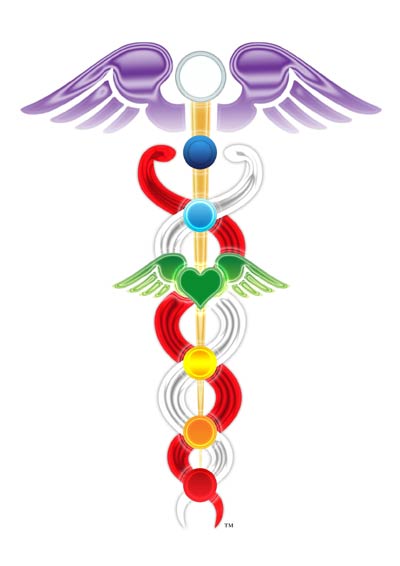
When I originally started doing this, I noticed that at first, the runes seemed to be coming to my third eye center and then the circle would stabilize around my throat/shoulders. For the past month though, it has seemed to be operating at my solar plexus, and the intensity of the red was brilliant and shining. This past weekend, it moved back to my throat one day, the next day it climbed up to my third eye/crown, where the circle then became a shimmering/prismatic white, it seemed like a halo or crown sitting on my head, blazing letters of flaming light. This morning, when I reached the end of the rune galdr, the circles formed at every energy center I work with (which is five, root, solar plexus, heart, throat, eye/crown) and then starting from the base, and going up, each Gar came in, rippling up the central channel that unites them. They all seemed to be turning at different speeds, and felt like different colors (although I didn’t necessarily take the time to perceive them all) they all felt harmonious and unified together.
I am not sure what it all means, if anything, but it was a really awesome experience to have.

October 10, 2010 – Ior


Ior

Ior is the dipthong “io”
Anglo-Saxon Rune Poem (from ragweedforge.com)

Ior is a river fish and yet it always feeds on land;
it has a fair abode encompassed by water, where it lives in happiness

The more I contemplate Ior, the more the feeling of contentment and happiness seems to come from this rune. It is definitely a rune which is highly mutable in nature, and so can go from hard to soft, from strong to weak, and change it’s forms easily, yet keeping true to it’s inner nature.

October 10 – 16, 2010 – Berkana reversed


Berkana reversed

Berkana is the letter B

Anglo-Saxon Rune Poem (from ragweedforge.com)

The birch bears no fruit; yet without seed it brings forth suckers,
for it is generated from its leaves. Splendid are its branches and gloriously adornedits lofty crown which reaches to the skies.

Berkana reversed signfies a lack or great slowing down of growth, nurturing influence and feminine presence. Perhaps a recent injury is being slow to heal and recover. You might find that feminine might be less present in your life, or their influence is not as pronounced as normal. You might find that instead of being nurtured, you need to reach out and nurture people instead. This might be difficult for you, but it’s time has come to return the favors given to you.

October 8, 2010 – Yr reversed


Yr reversed

Yr is the letter Y

Anglo-Saxon Rune Poem (from ragweedforge.com)

Yr is a source of joy and honour to every prince and knight;
it looks well on a horse and is a reliable equipment for a journey

Yr reversed indicates a loss of skill, ability, and efficiency. One of things I associate with Yr is the hands, and in a reading for health, Yr reversed would indicate problems with the hands. In general, it might indicate a need to pay attention to what you are touching, and how you are handling things, physically and metaphorically. Are you being too rough, or too gentle? Maybe just the excessive repetition of a certain action is beginning to wear you down, in whatever the issue is about. As you force yourself through the motions, you find that your effectiveness deteriorates because you just can’t before like you were able to before.

Runes, Time, Planets, Stars pt 2

In exploring the connection between runes and the planets, it seems that it was included as an after thought. Most of his writing about this area again focuses on cycles, mainly cycles of the Sun and Moon, also know the Great Cycle, when the two great lights re-align and repeat their patterns every 19 years. His inclusion of the outer planets, all the way out to “planet x” and he talks about another equally puzzling numerical series that somehow he relates to the runes, and days of the calendar. I think he actually spends al of 10 pages talking about the planets, before he turns back to this endless discussion of numerical sequences, and his odd alignments with runes. His treatment of the planets are of the most interest here though.

As I imagine, most of my readers are aware, the 7 classical planets are preserved in most cultures days of the week. Monday is the day of the Moon, Tuesday is the day of Mars, Wednesday is the day of Mercury, etc… In Germanic languages, many of the days are named after Germanic gods who were paralled with Greco-roman gods. Tuesday means the day of Tyr or Tiw, Wednesday is the day of Wodan/Odhinn, Thursday is the day of Thor, and Friday is the day of Freya/Frigga, with this pattern continuing with Sunday and Monday, as the words for the Sun and Moon are taken from Germanic languages, not latin. Sunna and Mani are the gods of the Sun and Moon, Sunna being the Goddess of the Sun (in contrast to the Greco-roman Helios and Apollo, who were male) and Mani, who is a God of the Moon (in contrast to Selene, Artemis and other Goddesses from southern Europe). Their name survive in Sunday (the day of Sunna) and Monday (the day of Mani. Saturday is a direct adapation of the Day of Saturn, as it seems there was no equivalent to in the Germanic gods for such a being. This is where things get odd, as the book states that Sunday is named for the Goddess Sol, whose sister is Mani, and Saturday is for Saeter, a by name of Loki. Yet, there is no evidence of this. One of the alternate names for Saturday that appears in Germanic languages is Laugardag, which means “washing day” as this was the day that people would bath, and clean. He presents this name as also a by name of Loki. This naming is different then most southern European cultures who either named it for Saturn, or adapted from the jewish practice of calling it Shabbat (which is where names like Samedi, Sabado, and the current german name Samstag, although other Germanic countries preserve the Greco-roman name in Zaterdag, which is Dutch).

The outright invention of making an equivalent like that, and presenting it in a factual manner just really bothers me. Through all of this, there is no connection made between the runes and the planets at all, which I find to be the most curious thing, as in traditional astrology, it was the planets that were of major interest and influence, and to ignore a relationship between the planets and the runes, seem to neglect a significant aspect of what a Runic astrology would be about.
The most difficult thing again is in the creation of a runic horoscope, where the runes are aligned again with the houses, signs, and directions. Nigel Pennick’s alignment of the runes onto the 12 house dividsion seems to again create problems, as the attributions and values just don’t seem to line up correctly between the runes, the seasons, and houses. His alignment breaks from the traditional lay out of the astrological chart, placing the vernal equinox at the midheaven, and moving Aries to that location as well, so that Berkana can align with Aries, and the solstices now fall on the ascendant and descendant with Dagaz and Jera. It really seems to defy the logic of the Elder Futhark and it’s meanings, and the layout of the house chart, where aries is located in the east, with the ascendant, and the first hour, which places it with the equinox, at least in the tropical zodiac. His alignment again, is also off centered, with 3 runes occuping the space over each sign, with only one sign in full, with the two others only taking up half of the degrees of the beginning and ending of other signs. Why he does just assign two runes to each zodiac, I am not really entirely sure, as the combination of such, while maybe imperfect, would not create this inelegant attribution where things don’t line up. In most Astrology as I know it, that seems to be determining factor, is the creation of an elegant system that describes spiritual verities and helps to communicate them to earth, through stars, planets, and equal numerical division. It seems that the Runic Astrology proposed so far, is anything but those qualities.