Tag Archives: pagan blog project

C is for Cenaz

Lewes_Bonfire,_discarded_torch

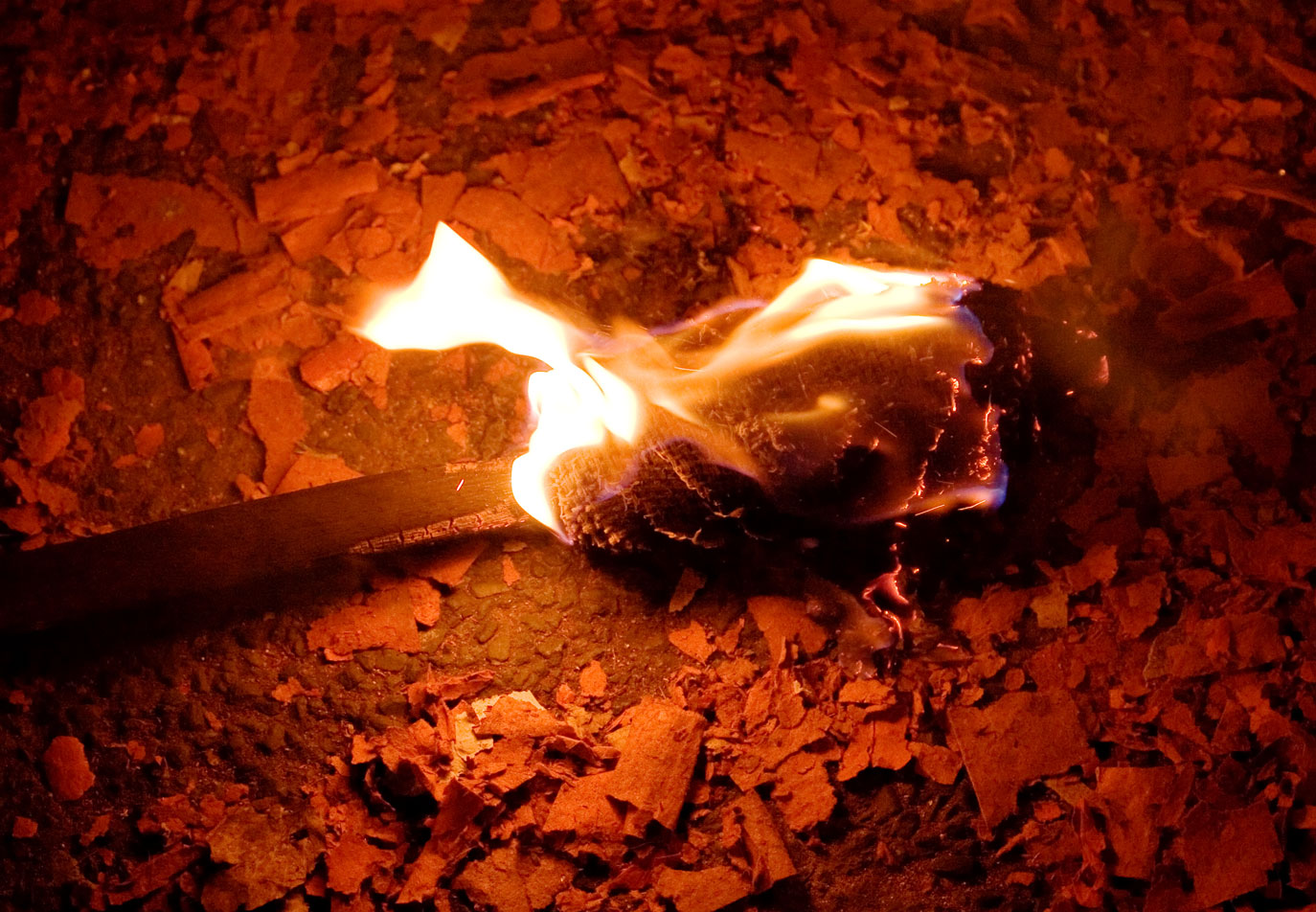
The rune I like to attribute for the letter C is Cenaz, or just Cen. The symbolism associated with Cenaz is the torch, a piece of wood or metal, that often has some kind of extra fuel source attached to one end, with that fuel source is often some kind of textile that has been soaked in some kind of accelerant or flammable chemical. This allows the torch to be carried around to shed firelight in dark places, either inside buildings that didn’t have windows (and thus no natural light) or in caverns.

As indicated by the symbolism of a torch, this rune is about fire, and light, and things being revealed. In this case though, this is the fire that has been tamed by humanity (unlike qweorth), the light that is wielded by humanity (unlike sowilo), and what is revealed is what is sought by humanity. This colors my interpretation of Cenaz as being the light and fire of humanity, our inspiration, our drive, our passions, that which makes us burn, ignite and shine. While a common symbol for learning, knowledge and education is the lit oil lamp, a symbol that is very Mediterranean, the northern European equivalent would be the torch. You could also extend it to the forge as well, as that is the fire that is harnessed and controlled to create and make things for use by humanity, from basic metal tools to weapons. But that flame is also metaphorical, the flame of passion, the fires of creativity, that spark of an inspiration that sets people on the path to making, making anything from prose to computers.

As I’m writing this, I’m alternating with videos on YouTube, and it occurred to me that these things, music videos, lectures, comedic gags, are that spark of Cenaz at work. Someone had that idea of creating something that would be filmed and made into a video, to express something, or share information that is important to them, or even just to create a laugh, a moment of joyous catharsis. The flame of Cenaz is shining there, revealing something from the creator, but also revealing something to the audience.

My own experience of the spirit of Cenaz was that he was a slim figure, with bright red hair and pale skin, with features like fantasy elves. He was elegant, but crafty and clever and quick with words.

A ritual for Cenaz

what you’ll need
-a red candle
-a candle holder
-any kind of oil that is scented with cinnamon
-a small slip of paper
-red pen

take the slip of paper, and with the red pen, draw the Cenaz rune on it. Then take the red candle, and with a metal implement (pin, needle, nail) carve a Cenaz rune also into it. Anoint the candle with the chosen oil. Some options could be Fast Luck, or Abramelin oil, or a personally made oil that uses cinnamon. Place the candle in the holder, and set the holder on top of the paper. Light the candle, and as it burns chant to your self the name of the rune Cenaz (the C is a hard “k” sound) 9 times. Imagine the flame of the candle beaming it’s light into your eyes and our third eye, and that light sparks a flame inside you. That flame reveals things inside you, revealing your passions, revealing ideas and thoughts for things to do and make, revealing artistic pursuits of all kinds, to forgotten knowledge, events or memories that could be of a benefit to you know. Do this for about 15 minutes. Then snuff the candle with your fingers or a candle snuffer. Repeat this for 7 days in 15 minute increments, until the last day when you should let the candle burn out completely, although before you do so, take the paper form underneath, and burn it in the flame, putting into a fire safe container to burn until it is consumed. Dispose of the ashes by the entrance to your home or building of residence.

B is for Blood

Hot Blood Wallpapers


The inspiration I am having right now seems to be a very potentially a difficult and challenging topic, but, nothing is else is coming to mind, so here I go.


Blood.  It makes quite a few people very squeamish.  I know I dread getting shots or giving blood, but sometimes it needs to be done.  But blood also was a part of more then a few ancient traditions, and often in different ways.


The most significant and seemingly enduring symbolism of blood is life.  Because when a human being, or an animal is cut or pierced, they bleed and this red fluid comes out, and if enough red fluid comes out, that person or animal dies.  And so, anything that has a red fluid, or could be used to produce a red fluid like substance, became symbolic of this red fluid that seemed to be the vital fluid and liquid of life.  Thus trees that produce red sap, minerals that could produce red pigments, plants that would produce red dyes, and everything else that would produce red. Because of the primal, atavistic recognition of the importance of blood, red is probably one of the three most long lasting and widely used colors, the others being white and black.


Over time, the importance and value of blood and it’s life power became recognized in various cultures.  In ancient burials, people’s bones would be rubbed or dusted with red ochre, perhaps as sign or significance of their blood returning to the earth, or with the thought that they might rise up again, perhaps has a spirit, or being reborn. The word “bless” actually comes from a root word meaning blood, as the method of blessing things in some culture was to sprinkle the blood of sacrificed animals upon them, either items or people.  In modern Northern European paganism, they celebrate “blots” which originally referred to the offerings of blood that were involved in such events.


Because of the  significance of blood, who had control of it’s spilling, and also its source, became very important and controlled especially when it came to humans.  Many ancient cultures probably had laws governing menstrual blood.  While there are still continuining examples today, such as Orthodox Judaism, Islam, and Hinduism, although some of the countries where these religions operate have deemed those laws to be unfair and unequal to women (which they are) some people still follow them out of tradition.  Thus women become set aside during their menstrual period.  I suspect this was widespread through the ancient west, as Agrippa makes note in the 3 books of Occult Philosophy that menstrual blood, and even the shadow of menstruating woman was deemed to be very hazardous and even dangerous to everyone around them, as it might blight crops, stop cows from milking, kill lesser animals, and bring infertility to other women and impotency to men.  A very different viewpoint from most modern paganism, which has been strongly influenced by feminism and the movement to bring justice and equality to women.
The other image of blood, supported by the movie industry, is of course one of human or animal sacrifice, usually portrayed as horrific act involving torture and barbarous methods of butchery for the target involved.  While in most things I have read, it seems less and less likely that ancient mediterranean cultures did practice human sacrifice, there is still documentation of it occuring in other parts of the world, although usually in very special and specific cases.  While in most of the Western World, animal sacrifice is also gone to a certain degree (outside of Kosher and Halal traditions) in Africa, and the african diaspora, Animal sacrifice plays a role, and blood is often the key part of the sacrifice.  As blood is considered the vital essence, it is that which is usually offered to the gods and spirits, whereas the muscle maybe kept and cooked and distributed to the community to eat and feast.  Unlike in horror movies, the sacrifice is usually done respectfully , with very little suffering, and is more like a ritualized method of butchering the animal then the horror movie shocker of torture, mutilation and waste.
An example of offering blood from ancient Sparta  was in a ritual to Artemis.  One of her priestess would hold her image, while men would take a whip and beat the new young men, until the blood flowed freely down their backs.  If the image grew heavy, the priestess would say so, as that was a sign that the man was holding back, as he favored the young man and wished to lessen the harm.  This was a ritual to propitiate Artemis’ wrath for the grave insult that was done to her by the Spartans.  Originally they thought she wanted them to kill one of the young men, but realized that only their blood was needed, so the scourgings began instead.  After being scourged, the young man was officially a man, and no longer a boy or youth.


There is some people who given blood in modern practices.  Some of them are reconstructionists, trying to recreate the pagan past as honestly and correctly as they can. Others might be unallied to any particular group, but following intuition and inspiration, will give their own blood, or perhaps blood collected from butchers.  The easiest way to give your own blood is with diabetic needles, as they are often sold sterilized, and really all you need is just a drop.
Another way you can give blood though is more metaphorical.  The phrase “blood, sweat and tears” as a sign of hard work and effort put into a project would be a fitting offering to the Gods and spirits that you seek a relationship with.  This “blood” is often just as acceptable, or even more so then physical blood in this day age.

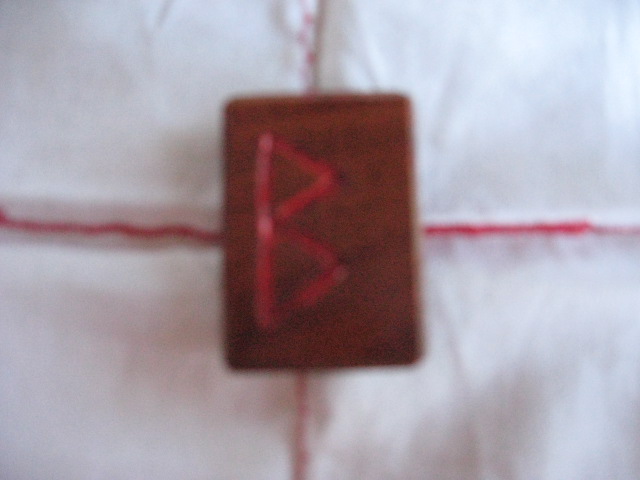
B is for Berkana

Because I spent I good deal of time talking about two other runes that relate to trees, it only feels appropriate that the only B rune should be talked about.

Berkana

Berkana is often translated as birch, a tree that most people are probably passingly familiar with. It has white bark, which often is seen peeling off during certain parts of the year, which seems similar to some kinds of paper, and in fact people did use to write on birch bark for somethings and probably still do, I think it is the white bark of most birch trees that probably stands out the most in my mind, as that much stark lack of color is very distinct, especially when it is off set with many green leaves.
birch-tree1
The esoteric symbolism of birch and berkana is what is usually focused on. The meanings that I have always ascribed to it is growth, healing, nurturing, becoming, life changes, and liberation. My own meditations and journeys with this rune have pointed to the powerful feminine influence. My own experience of the spirit of Berkana is as the Birch mother, female spirit with pale skin and green hair, who dwells in a endless forest of birch, with light shimmering through the leaves of the forest.

In part of the tree pattern that seems apparent in the runes, Berkana is the world tree as the generative, creative aspect. In the history of the world, the birch was the first tree to emerge in open areas, quickly turning an area that was an open meadow into a forest, and as the glaciers retreated further north, birch trees would continue to follow, while other trees may then fill in the areas that had once been filled with birch. In the Anglo-Saxon rune poem, it is even described as just growing from suckers that the parent tree spread from it. Although now days research has shown that is not actually a birch tree or a member of the betula family, the concept of prodigous generative power carries forward in the rune.

A is for Aegishjalmur

IMG_0002

I’m sure most people who are interested in this sorts of things will be somewhat passingly familiar with the aegishjalmur, and it’s also most common appearance.  However, there are quite a few variations on that form, and they were used for a good number of things from looking at various spells and entries in Icelandic magic of the middle ages.

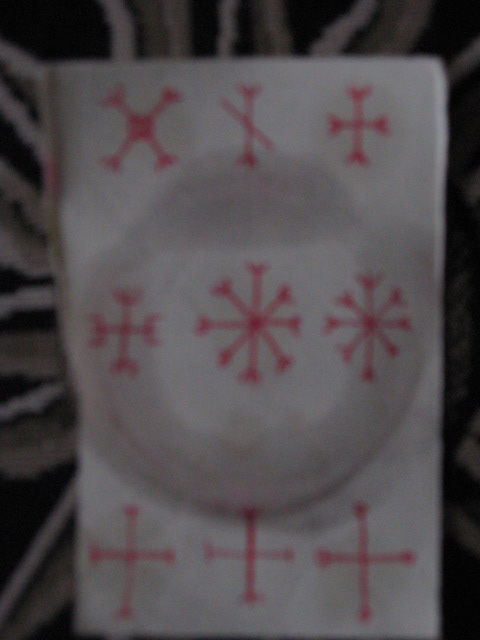
This particular version, shown above, is one of my favorites.  The name  of these is aegishjalm arnirniu (I’m sorry, I don’t quite know how to put accent marks in there, so I apologize for their absence) which is translated as the Nine Helms of Aegir.  The text associated with them says “These are the nine helms of Aegir that everyone who deals with knowledge cannot do without. Each of them should be used.”


Following these directions, I put them all down on a piece of paper, in red ink, and proceeded to use that as petition paper that would I burn candles on (thus the waxy circle on the paper, yes this is a photo graph of the actual talisman).   As there is no further directions given, I just laid them all out as I felt was aesthetically pleasing, and using oils and incense with them as it relates to wisdom, knowledge, and mind empowerment.


Here is a spell.


What you’ll need

-a purple candle

-a wisdom oil (King Solomon’s Wisdom, or just Wisdom etc…)

-incense (wisdom incense if you can, but just frankincense or copal will do in a pinch.  You can could also burn sage leaves)

-a candle holder

-piece of paper

A piece of solomon seal root

-red pen


Take the piece of paper (something about 2×4 inches will be fine) and using the red paper, write the 9 helms of aegir on the paper. Put it however you want, but there should probably be a helm in each corner and a helm on each side with one helm in the middle.


Using the Wisdom oil and your finger, dab a small amount of oil on to each helm.


Take the solomon seal root, and fix it with the Wisdom oil.
Take the purple candle, and anoint it with Wisdom oil.  Do this however you prefer anoint candles. Set the candle in the holder, and place the holder on top of the piece of paper. ( I find a good brass holder is good for this purpose.) If you can, place the Solomon seal root under the candle holder, on top of the paper, or place it next to the base of the holder.


Light some charcoal, and put it into your censer, brazier or whatever you burn charcoal in.  Put a good pinch of incense on the charcoal and let it smoke.  Light the candle wick and let it burn.


As the candle burns, you should pray.  You might recite mantras for wisdom, recitations from Psalms or Proverbs.  You can also pray silently, and allow the Wisdom of God or the Gods, or the ancestors to come to you and fill you.  You could also meditate.


You can do this spell in one day, by letting the candle burn down. You could also repeat it for 7 days, burning the candle in 15 minute increments, snuffing it each day with your fingers or a candle snuffer, until the 7th day, where you should let it finish burning.


Take the solomon seal root, and put it into a flannel bag of either white, purple or red, along with the paper with the nine helms on it.  Carry it with you, or place it under your pillow as you sleep, keep it on a secure place on your altar or wherever you keep your altar.  Whenever you are doing your daily practice of prayer, you should take it, and wear the bag, or sit with it while you do your daily prayers or meditation.