Rune of the day – February 12, 2014
Leave a reply

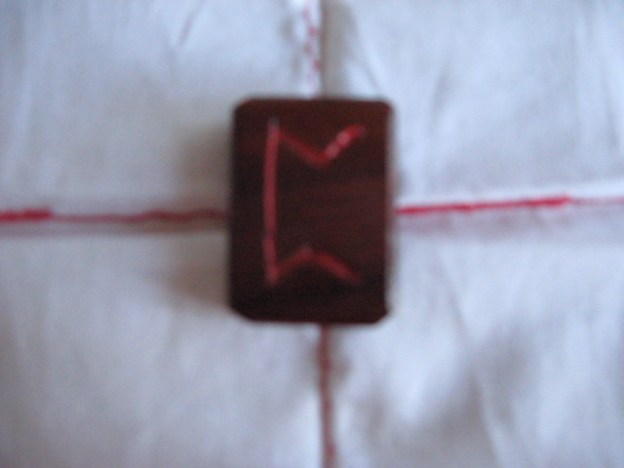

Deep in the center of my being is an infinite well of light. I now allow this light to rise to the surface. It fills my heart, my body, my mind, my soul, my consciousness, my very being. The light radiates out from me in all directions and returns to me multiplied. The more light I use and give, the more I have to give; the supply is endless.
Notes:
Some visualization and suggestion for further practice, based upon recent information.
Say:
Deep in the center of my being is an infinite well of light
Chant:
AH
Visualize:
Visualize at the center of your torso, a shining brilliant point of light, like a tiny star, shining with a pure clear light. As this light, now perceived, shines, it draws the attention of all the gods and spirits that you have worked with, now work with, and will work within, even your own essential being, which turn and look upon you.
Say:
I now allow this light to rise to the surface of my being. It fills my heart, my body, my mind, my soul, my consciousness, my very being
Say:
AH
Visualize:
See that point of pure, clear light shine brighter and brighter, starting to fill you, and expand. At the same time the gods and spirits points of light, even your very essence, also shine, and their light flows towards you as well, filling you. The combined lights purify and cleanse you of all unwanted and harmful influences
Say:
The light radiates out from in in all directions and returns to me multiplied. The more light I use and give, the more I have to give. The supply is endless.
Chant:
AH
Visualize:
Now together with your gods and spirits, the pure, clear light radiates out from all of you, and shines out into the vastness of space and time, filling it with that light, sharing with it with all beings, even the very essence of being. At the same time, all beings responded back with pure, clear light, even the very essence of being, and all shines with pure clear light.
Part of my magical education is in conjure/rootwork/hoodoo/witchcraft (a combination of terms that I take from a series with that title compiled of internviews collected by Harry S Hyatt). I can honestly say I originally came to it back in the early 90’s, mostly in the forms of dollar books about magic, like Marie Laveau’s Black and White Magic and other similar texts. It was also about that time that I first discovered Lucky Mojo and their archives of spells and information, things which amazed me and enchanted me, and also pointed out things like working with Psalms and the bible for magic. Being raised in a thoroughly unusual sect of Christianity that is quite mystical in my opinion, the idea was right on, and I full embraced it.
Later on, much later on, I would find Lucky Mojo again, and memories of it’s first discovery came rushing back to me, and I went to friends that I shared the interest in magic with and I told them “I am going to sign up for Catherine Yronwode’s Correspondence Course” and they said “Oh awesome, we just did, how cool we can work on it together” and I said “WHAT??? You knew about this and you didn’t tell me?!?!?!” and the next day I signed up and everything was awesome. And we would talk about what we read, and what were doing, and where to finds baths, and herbs and everything. It really became the new drink I couldn’t put down, and really still haven’t to this day. It really opened my eyes to a much greater world of magic, of folklore, of herbs then other books, and study had done before.
It also opened my eyes to African American people and culture, and it really made me re-evaluate some of my actions and inner behaviors, that are really just taught across the melting pot of culture in the United States. It set the spark to my flame that wants to know things, to understand things, and see how and where people are coming from, because I just really like to know. I have this thing where I value knowledge for it’s own sake and nothing else. With that in mind, I read other books. I sought out folktales of Southern African Americans, and more of their poetry, both older and perhaps famous, but also contemporary. I read academic publications of people who have researched the interesting and unique combination of folk magic practitioners of African Americans. I set foot in botanicas that are scattered about the Greater Los Angeles area, and became familiar with parts of the African diaspora, so I could learn to identify the difference between a conjure man, and member of an Afro-Caribbean religion, and Mexican folk magic practitioner. I went looking for older pamphlets about spiritual work that are still in print today, because they are regularly popular. During it all I sat down, and I burned candles, and worked with oils, and made incenses and powders and baths from minerals and herbs, and I went to crossroads and gathered graveyard dirt with a dime and bottle of whiskey and I learned to listen to spirits and Spirit.
With all that in mind, I then looked to what seemed to be missing from European stuff (being of European descent) and I found bits and pieces. Reading about hexerei and braucherie, and picking up the Long Lost Friend, and I got into grimories from Europe and made myself read a full translation of the Three Books of Occult Philosophy from cover to cover, reading the footnotes, and looking up terms, and noticing patterns and elements that appeared in the USA among folk magic practitioners, and where they got it, well, they seemed to get it from early merchants of the 20th century whose African American and southern customers who wanted secret symbols, magic squares, blessed salt and john the conqueror roots. I noticed that a lot of herbal folklore was living in Conjure. But yet, it was handled in a unique way. I noticed that in contemporary American alternative spirituality the tools of conjure play and important role, a role that was quickly adopted in the 60’s and 70’s with magic oils, incenses, bathes, washes and colognes with names like “Bend Over” and “Kiss me” but with the neo pagans making their own like “Saturn” and “Goddess” because those neo pagans were hungry for magic and sorcery and witchcraft, and the unique, and the curious, and occult. I think this is a hunger that continues today, which is why people are always finding new ways of doing old things, but also the old ways of doing things, and making all their distinctions, and separate groupings, and traditional crafts, and conure this and hoodoo that because they are curious and hungry for magic. For conjure.
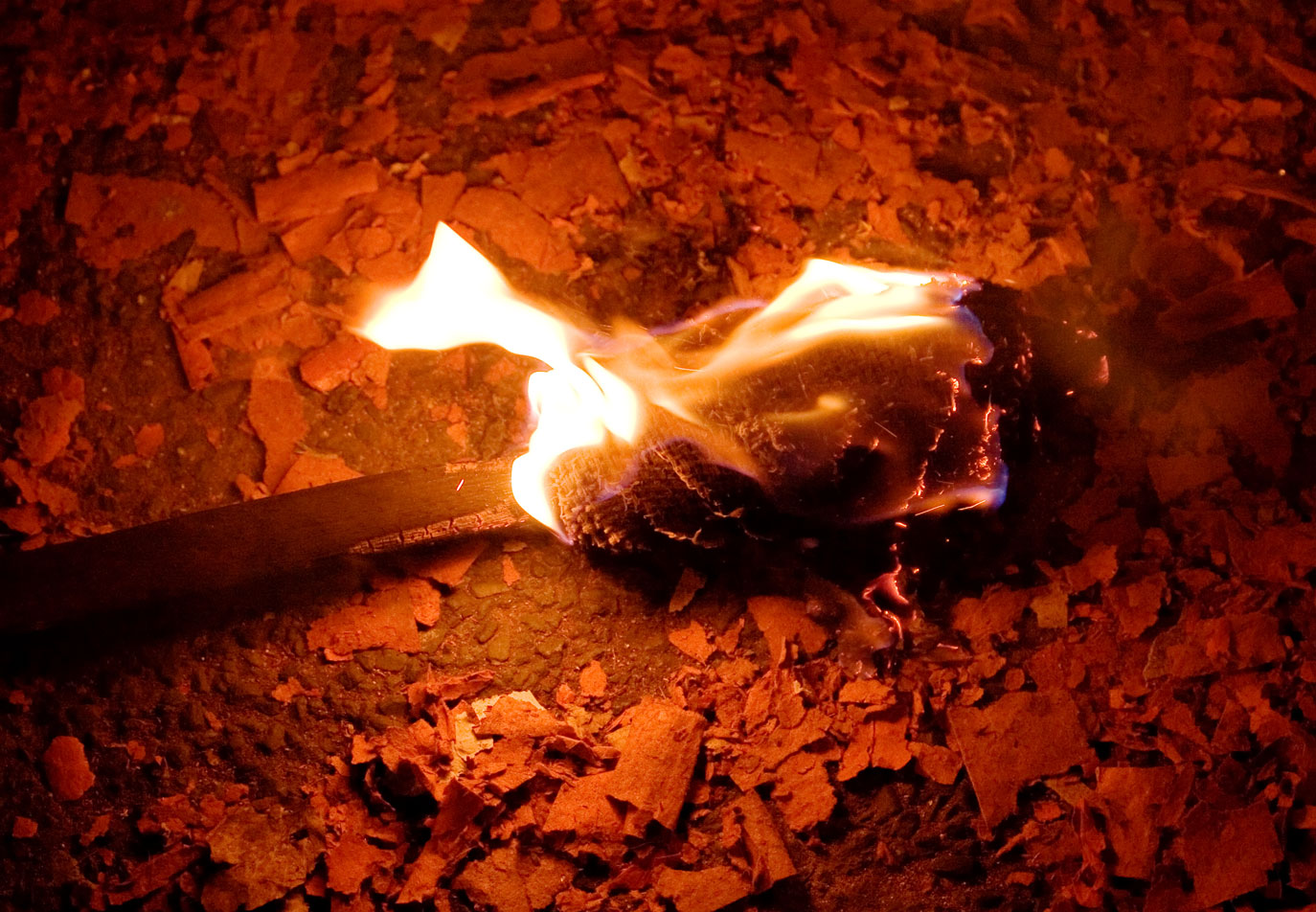
The rune I like to attribute for the letter C is Cenaz, or just Cen. The symbolism associated with Cenaz is the torch, a piece of wood or metal, that often has some kind of extra fuel source attached to one end, with that fuel source is often some kind of textile that has been soaked in some kind of accelerant or flammable chemical. This allows the torch to be carried around to shed firelight in dark places, either inside buildings that didn’t have windows (and thus no natural light) or in caverns.
As indicated by the symbolism of a torch, this rune is about fire, and light, and things being revealed. In this case though, this is the fire that has been tamed by humanity (unlike qweorth), the light that is wielded by humanity (unlike sowilo), and what is revealed is what is sought by humanity. This colors my interpretation of Cenaz as being the light and fire of humanity, our inspiration, our drive, our passions, that which makes us burn, ignite and shine. While a common symbol for learning, knowledge and education is the lit oil lamp, a symbol that is very Mediterranean, the northern European equivalent would be the torch. You could also extend it to the forge as well, as that is the fire that is harnessed and controlled to create and make things for use by humanity, from basic metal tools to weapons. But that flame is also metaphorical, the flame of passion, the fires of creativity, that spark of an inspiration that sets people on the path to making, making anything from prose to computers.
As I’m writing this, I’m alternating with videos on YouTube, and it occurred to me that these things, music videos, lectures, comedic gags, are that spark of Cenaz at work. Someone had that idea of creating something that would be filmed and made into a video, to express something, or share information that is important to them, or even just to create a laugh, a moment of joyous catharsis. The flame of Cenaz is shining there, revealing something from the creator, but also revealing something to the audience.
My own experience of the spirit of Cenaz was that he was a slim figure, with bright red hair and pale skin, with features like fantasy elves. He was elegant, but crafty and clever and quick with words.
A ritual for Cenaz
what you’ll need
-a red candle
-a candle holder
-any kind of oil that is scented with cinnamon
-a small slip of paper
-red pen
take the slip of paper, and with the red pen, draw the Cenaz rune on it. Then take the red candle, and with a metal implement (pin, needle, nail) carve a Cenaz rune also into it. Anoint the candle with the chosen oil. Some options could be Fast Luck, or Abramelin oil, or a personally made oil that uses cinnamon. Place the candle in the holder, and set the holder on top of the paper. Light the candle, and as it burns chant to your self the name of the rune Cenaz (the C is a hard “k” sound) 9 times. Imagine the flame of the candle beaming it’s light into your eyes and our third eye, and that light sparks a flame inside you. That flame reveals things inside you, revealing your passions, revealing ideas and thoughts for things to do and make, revealing artistic pursuits of all kinds, to forgotten knowledge, events or memories that could be of a benefit to you know. Do this for about 15 minutes. Then snuff the candle with your fingers or a candle snuffer. Repeat this for 7 days in 15 minute increments, until the last day when you should let the candle burn out completely, although before you do so, take the paper form underneath, and burn it in the flame, putting into a fire safe container to burn until it is consumed. Dispose of the ashes by the entrance to your home or building of residence.

The inspiration I am having right now seems to be a very potentially a difficult and challenging topic, but, nothing is else is coming to mind, so here I go.
Blood. It makes quite a few people very squeamish. I know I dread getting shots or giving blood, but sometimes it needs to be done. But blood also was a part of more then a few ancient traditions, and often in different ways.
The most significant and seemingly enduring symbolism of blood is life. Because when a human being, or an animal is cut or pierced, they bleed and this red fluid comes out, and if enough red fluid comes out, that person or animal dies. And so, anything that has a red fluid, or could be used to produce a red fluid like substance, became symbolic of this red fluid that seemed to be the vital fluid and liquid of life. Thus trees that produce red sap, minerals that could produce red pigments, plants that would produce red dyes, and everything else that would produce red. Because of the primal, atavistic recognition of the importance of blood, red is probably one of the three most long lasting and widely used colors, the others being white and black.
Over time, the importance and value of blood and it’s life power became recognized in various cultures. In ancient burials, people’s bones would be rubbed or dusted with red ochre, perhaps as sign or significance of their blood returning to the earth, or with the thought that they might rise up again, perhaps has a spirit, or being reborn. The word “bless” actually comes from a root word meaning blood, as the method of blessing things in some culture was to sprinkle the blood of sacrificed animals upon them, either items or people. In modern Northern European paganism, they celebrate “blots” which originally referred to the offerings of blood that were involved in such events.
Because of the significance of blood, who had control of it’s spilling, and also its source, became very important and controlled especially when it came to humans. Many ancient cultures probably had laws governing menstrual blood. While there are still continuining examples today, such as Orthodox Judaism, Islam, and Hinduism, although some of the countries where these religions operate have deemed those laws to be unfair and unequal to women (which they are) some people still follow them out of tradition. Thus women become set aside during their menstrual period. I suspect this was widespread through the ancient west, as Agrippa makes note in the 3 books of Occult Philosophy that menstrual blood, and even the shadow of menstruating woman was deemed to be very hazardous and even dangerous to everyone around them, as it might blight crops, stop cows from milking, kill lesser animals, and bring infertility to other women and impotency to men. A very different viewpoint from most modern paganism, which has been strongly influenced by feminism and the movement to bring justice and equality to women.
The other image of blood, supported by the movie industry, is of course one of human or animal sacrifice, usually portrayed as horrific act involving torture and barbarous methods of butchery for the target involved. While in most things I have read, it seems less and less likely that ancient mediterranean cultures did practice human sacrifice, there is still documentation of it occuring in other parts of the world, although usually in very special and specific cases. While in most of the Western World, animal sacrifice is also gone to a certain degree (outside of Kosher and Halal traditions) in Africa, and the african diaspora, Animal sacrifice plays a role, and blood is often the key part of the sacrifice. As blood is considered the vital essence, it is that which is usually offered to the gods and spirits, whereas the muscle maybe kept and cooked and distributed to the community to eat and feast. Unlike in horror movies, the sacrifice is usually done respectfully , with very little suffering, and is more like a ritualized method of butchering the animal then the horror movie shocker of torture, mutilation and waste.
An example of offering blood from ancient Sparta was in a ritual to Artemis. One of her priestess would hold her image, while men would take a whip and beat the new young men, until the blood flowed freely down their backs. If the image grew heavy, the priestess would say so, as that was a sign that the man was holding back, as he favored the young man and wished to lessen the harm. This was a ritual to propitiate Artemis’ wrath for the grave insult that was done to her by the Spartans. Originally they thought she wanted them to kill one of the young men, but realized that only their blood was needed, so the scourgings began instead. After being scourged, the young man was officially a man, and no longer a boy or youth.
There is some people who given blood in modern practices. Some of them are reconstructionists, trying to recreate the pagan past as honestly and correctly as they can. Others might be unallied to any particular group, but following intuition and inspiration, will give their own blood, or perhaps blood collected from butchers. The easiest way to give your own blood is with diabetic needles, as they are often sold sterilized, and really all you need is just a drop.
Another way you can give blood though is more metaphorical. The phrase “blood, sweat and tears” as a sign of hard work and effort put into a project would be a fitting offering to the Gods and spirits that you seek a relationship with. This “blood” is often just as acceptable, or even more so then physical blood in this day age.
Because I spent I good deal of time talking about two other runes that relate to trees, it only feels appropriate that the only B rune should be talked about.
Berkana is often translated as birch, a tree that most people are probably passingly familiar with. It has white bark, which often is seen peeling off during certain parts of the year, which seems similar to some kinds of paper, and in fact people did use to write on birch bark for somethings and probably still do, I think it is the white bark of most birch trees that probably stands out the most in my mind, as that much stark lack of color is very distinct, especially when it is off set with many green leaves.

The esoteric symbolism of birch and berkana is what is usually focused on. The meanings that I have always ascribed to it is growth, healing, nurturing, becoming, life changes, and liberation. My own meditations and journeys with this rune have pointed to the powerful feminine influence. My own experience of the spirit of Berkana is as the Birch mother, female spirit with pale skin and green hair, who dwells in a endless forest of birch, with light shimmering through the leaves of the forest.
In part of the tree pattern that seems apparent in the runes, Berkana is the world tree as the generative, creative aspect. In the history of the world, the birch was the first tree to emerge in open areas, quickly turning an area that was an open meadow into a forest, and as the glaciers retreated further north, birch trees would continue to follow, while other trees may then fill in the areas that had once been filled with birch. In the Anglo-Saxon rune poem, it is even described as just growing from suckers that the parent tree spread from it. Although now days research has shown that is not actually a birch tree or a member of the betula family, the concept of prodigous generative power carries forward in the rune.
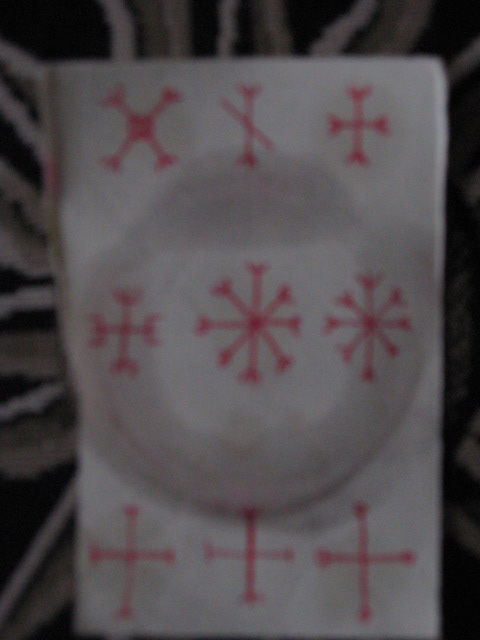
I’m sure most people who are interested in this sorts of things will be somewhat passingly familiar with the aegishjalmur, and it’s also most common appearance. However, there are quite a few variations on that form, and they were used for a good number of things from looking at various spells and entries in Icelandic magic of the middle ages.
This particular version, shown above, is one of my favorites. The name of these is aegishjalm arnirniu (I’m sorry, I don’t quite know how to put accent marks in there, so I apologize for their absence) which is translated as the Nine Helms of Aegir. The text associated with them says “These are the nine helms of Aegir that everyone who deals with knowledge cannot do without. Each of them should be used.”
Following these directions, I put them all down on a piece of paper, in red ink, and proceeded to use that as petition paper that would I burn candles on (thus the waxy circle on the paper, yes this is a photo graph of the actual talisman). As there is no further directions given, I just laid them all out as I felt was aesthetically pleasing, and using oils and incense with them as it relates to wisdom, knowledge, and mind empowerment.
Here is a spell.
What you’ll need
-a purple candle
-a wisdom oil (King Solomon’s Wisdom, or just Wisdom etc…)
-incense (wisdom incense if you can, but just frankincense or copal will do in a pinch. You can could also burn sage leaves)
-a candle holder
-piece of paper
A piece of solomon seal root
-red pen
Take the piece of paper (something about 2×4 inches will be fine) and using the red paper, write the 9 helms of aegir on the paper. Put it however you want, but there should probably be a helm in each corner and a helm on each side with one helm in the middle.
Using the Wisdom oil and your finger, dab a small amount of oil on to each helm.
Take the solomon seal root, and fix it with the Wisdom oil.
Take the purple candle, and anoint it with Wisdom oil. Do this however you prefer anoint candles. Set the candle in the holder, and place the holder on top of the piece of paper. ( I find a good brass holder is good for this purpose.) If you can, place the Solomon seal root under the candle holder, on top of the paper, or place it next to the base of the holder.
Light some charcoal, and put it into your censer, brazier or whatever you burn charcoal in. Put a good pinch of incense on the charcoal and let it smoke. Light the candle wick and let it burn.
As the candle burns, you should pray. You might recite mantras for wisdom, recitations from Psalms or Proverbs. You can also pray silently, and allow the Wisdom of God or the Gods, or the ancestors to come to you and fill you. You could also meditate.
You can do this spell in one day, by letting the candle burn down. You could also repeat it for 7 days, burning the candle in 15 minute increments, snuffing it each day with your fingers or a candle snuffer, until the 7th day, where you should let it finish burning.
Take the solomon seal root, and put it into a flannel bag of either white, purple or red, along with the paper with the nine helms on it. Carry it with you, or place it under your pillow as you sleep, keep it on a secure place on your altar or wherever you keep your altar. Whenever you are doing your daily practice of prayer, you should take it, and wear the bag, or sit with it while you do your daily prayers or meditation.
A starts off quite a few runes, ones that I particularly enjoy. So lets begin

Aethel – while different rune sets may spell this rune differently, I prefer this spell. It reminds of certain pagan scandinavian government practices called the Athling, the meeting of all people in Iceland to discuss law, property and punishment for people. It was in fact at an Athling that the icelandic people chose to become Christians, back in the day, and afterwards, abolished the Athling. Go figure.
But anyway, Aethel. Aethel, to my understanding of runelore, is the rune of home, homeland, and family, expressed in the form of the family property passed down from generation to generation, and so it also connects in deeply to the ancestors. Your ancestors, usually and specifically the ancestors of blood. Of course, living in the 21st century, sometimes knowing your ancestry and ancestors can be difficult, as families are now widely scattered over great areas, and you don’t always live within a few miles of your cousins, aunts, uncles, grandparents, and it seems far more people are having children later in life, rather then earlier (although it still happens) children may not be old enough to remember or meet grandparents, or even great grandparents. With that in mind, it can also signify what I like to think of all your ancestors, whether it’s from a spiritual tradition, or your adoptive family, or a connection based on skills, background, culture or subculture, many many things that make up the web of life, that unite us in a chain or connection that goes back to the very beginnings of the cosmos. Some might even call that link the river of blood, symbol of the blood of humanity, but also the blood of living things that evolved to become us, and that river even flows on to what the world and it’s inhabitants might become. Ancestors.

Ac – An Anglo-Saxon rune, what I see as the beginning of the 4th aettir, Ac means Oak, and of course, ir refers to the Oak tree, that mighty and revered tree that many people admire, adore, and in some cases venerate. This rune belongs to a body of runes that are different trees, which to me suggests some kind of importance to trees and people’s relationship with them, as well as perhaps some kind of tree cult.
Part of my understanding of Ac, from the it’s meaning of Oak, is the idea of endurance. Some of the oldest and mighties of trees are often oak trees, that have stood of centuries, if not longer. Even in some areas they are called Grandfather Oak. It’s also surprising how different oak trees can be from environment to environment. While most oak trees are deciduous, in California (where I live) there is the California liveoak, an oak tree that never loses it’s leaves, much like evergreen trees, but yet, it’s an oak. It does that because of the mediterranean climate. But like many other oaks, liveoaks live for very long time, get quite large, and seem to be able to take a licking and keep on growing. Thus, endurance. The ability to sit tight, and hold on, and weather time, and drought, and storms, and to keep growing, not to wither, or falter or fade.

Aesc – in the 4th aettir, this rune follows right after Ac, and is also a tree rune. In this case, it’s the tree Ash. The only ash tree I’m familiar with is the shamel ash, but there are quite a few varieties, and they are all wonderful trees. They can grow quite tall, and it seems, be very leaf and make great shade trees. Interestingly enough, the rune poem associated with Aesc, seems to comment on how high the grow, and that is the key thing I notice when working with Aesc, namely that it reaches up to heaven. In some of the lore of World trees, Ash is often mentioned, along side the Yew, and of course Oak. My as all those trees make appearances in the runes, I see them as showing different aspects of the world tree, that cosmic center and pillar which supports all things. The Ash is the heavenly side, the side reaching up to sky, connecting with the upper world, and the powers that dwell there. With Aesc, we can scale up to meet them, or they might be reaching down to knock us on the head and get our attention. Of course, when that connection is broken, all hell can break loose, as we run around, not thinking things through, not acting from a place of Wisdom, or Compassion, and we might pretty soon make a big mess of things.
 RUNEWORKER