
Tag Archives: magic

D is for Devotions


Devotions.  In my experiences it seems that most neo pagans of various sorts are not especially into, or do, devotions.  Oh, they might be dedicated to this god, or that goddess, and they might collect all sorts of images and read all sorts of books, but when it comes down to it, the most you might call “devotional” is that when they do a ritual and offer up some stuff and ask for something in return.  It’s certainly not a regular practice, let one weekly or daily.  This of course might be my own slanted viewpoint, as I find I am often interacting with people who are new to the craft, and so the idea of devotions is not something they are aware, usually because of their background.  They might even be actively rejecting it, as it has something that triggers old memories of childhood religious training, or unpleasant interactions in a previous religious settings.  So, they seem to fall by the wayside.  I do believe there are people who do devotions, and I like to think I follow many of their blogs, but over all it seems to be something that is done more by longer established living traditions, like ATR’s, culturally situated Buddhist practices, Hinduism, etc…

Of course, what’s interesting is that if you look into some of the first books about Wicca and witchcraft, devotions are there, but not always obvious.  I think because it’s kind of small in the context of a wiccan circle because it comes down to the cakes and wine.  That is all it is.  That is the devotional part of the ritual, but at the times I have done it, if you do it with reverence and it can be really intensely devotional.  Although it seems that many groups treat it more celebratory then as an act of devotion and offering, and also a communion with the gods.

Of course there are many other ways that it can be done.  My personal methods are mostly done through incense, a candle (or two) and clean water.  All of the items are blessed by me, and in doing so I clearly state that it is for this goddess or that spirit, and set it out for them to partake from. It’s all pretty straight forward and also very historical, as many cultures have offered incense, flame and light, and water, perhaps followed with prayers of praise and adoration.  Sometimes I have included food stuffs, usually sweets.  Some other ways is that I find items or plants that have a relation to the god or spirit, and I leave them their, as part of their personal collection.  For my main goddess I have given un-shelled walnuts, as she is identified with walnut trees.  These were votive offerings that I have blessed, and remain in a bowl on her space by her.  Another offering that is good to make is prayers.  Making prayers to powers that you have a good relationship with, even just to thank them, and praise them, is a great way to build a relationship with them, especially if you don’t ask for anything specific, or just indicate general blessings and good fortune, which if they are spiritual close to you, they will already be supplying to you as best as you can.  Not that asking hurts, but if you only go to someone to ask them for something all the time, I know people get tired of that behavior, and so I can only imagine that gods and spirits do as well.  Sometimes it’s good just to be grateful, and express that gratitude.

Other devotions can be even more involved.  Leaving things in specific places.  What little knowledge I have of ATR’s is that various spirits have places associated with them, where offerings to them are expected to be left.  It’s very easy to look into European and Mediterranean, and other regions of antiquity and soon figure out places that were that gods or spirits special zone of influence.  It can be correct to leave offerings there.  It also seems that some areas were also open to any spirit. Crossroads seem to be a popular place where all spirits go at some time, and so leaving offerings there, and placing them there in a ritualized manner with respect and devotional practice can be quite the experience.  Doing it in a public place that is often traveled through, can also be an intense experience, as demonstration of your dedication to overcome potentially socially awkward situations (like being in a graveyard with a crossroads in the middle of the graveyard, leaving offerings for the spirits of the dead, and other beings, at midnight) that in and of itself is an offering of time, and facing your fears.  Or going to the beach at dawn, and leaving offerings to be picked up by the surf.  All these places can have a devotional element, that when done with a focused intent, can help you connect more with the gods and spirits.  Another part of devotions can be timing.  As indicated in previous paragraph, times can also be an important part.  If you really start doing devotional practice, you end up with your own liturgical calendar of feast days, offering days and what not.  Depending upon their role, some gods might want their offerings down during daylight hours.  Other spirits might prefer them given at night, when it’s dark.  Some might prefer it to be during a new moon, whereas others prefer a full moon.  Some prefer having their water refreshed once a week, whereas others might need it refreshed every day, along with incense and prayers when it is given.  It depends upon you and the spirits and gods being worked with.  It also seems that spirits and gods know what they can ask for from someone, and not from someone else.  While one person might be called to make baked goods which go uneaten for 3 days, until they are shared, others might only need to give a quick prayer.  The one who must bake, can bake, and the one who can pray, is pretty much only able to pray.  While some might think the physical offerings and time that went into them might be more meaningful, a heartfelt and sincere prayer done with focus and intention can be quite powerful, even more meaningful because of that focus and attention. But it has more to do with the time, that which can be given as well as the time that it is given.

By giving focus to offerings, place and time, a devotional practice will soon develop.  From my own experience, a devotional practice will really transform and change how you interact with gods and spirits, as well as your own spiritual practice.  When you start making offerings, it seems as though something switches on.  It makes the spirituality more day to day, and more real in a practical physical sense.  If you are willing to dedicate 5 minutes every day to relate to some spiritual intelligence, then maybe there is something more to this.  Even if you are just operating from a psychological model, drives the point of a certain level of realness which change ones practice in a many ways.

A is for Aegishjalmur

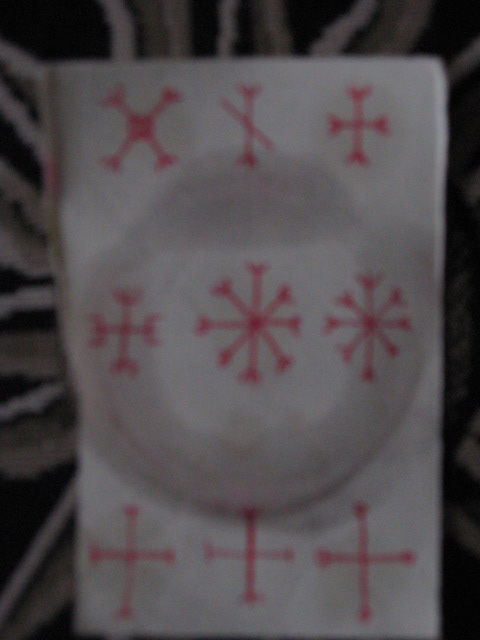
IMG_0002

I’m sure most people who are interested in this sorts of things will be somewhat passingly familiar with the aegishjalmur, and it’s also most common appearance.  However, there are quite a few variations on that form, and they were used for a good number of things from looking at various spells and entries in Icelandic magic of the middle ages.

This particular version, shown above, is one of my favorites.  The name  of these is aegishjalm arnirniu (I’m sorry, I don’t quite know how to put accent marks in there, so I apologize for their absence) which is translated as the Nine Helms of Aegir.  The text associated with them says “These are the nine helms of Aegir that everyone who deals with knowledge cannot do without. Each of them should be used.”


Following these directions, I put them all down on a piece of paper, in red ink, and proceeded to use that as petition paper that would I burn candles on (thus the waxy circle on the paper, yes this is a photo graph of the actual talisman).   As there is no further directions given, I just laid them all out as I felt was aesthetically pleasing, and using oils and incense with them as it relates to wisdom, knowledge, and mind empowerment.


Here is a spell.


What you’ll need

-a purple candle

-a wisdom oil (King Solomon’s Wisdom, or just Wisdom etc…)

-incense (wisdom incense if you can, but just frankincense or copal will do in a pinch.  You can could also burn sage leaves)

-a candle holder

-piece of paper

A piece of solomon seal root

-red pen


Take the piece of paper (something about 2×4 inches will be fine) and using the red paper, write the 9 helms of aegir on the paper. Put it however you want, but there should probably be a helm in each corner and a helm on each side with one helm in the middle.


Using the Wisdom oil and your finger, dab a small amount of oil on to each helm.


Take the solomon seal root, and fix it with the Wisdom oil.
Take the purple candle, and anoint it with Wisdom oil.  Do this however you prefer anoint candles. Set the candle in the holder, and place the holder on top of the piece of paper. ( I find a good brass holder is good for this purpose.) If you can, place the Solomon seal root under the candle holder, on top of the paper, or place it next to the base of the holder.


Light some charcoal, and put it into your censer, brazier or whatever you burn charcoal in.  Put a good pinch of incense on the charcoal and let it smoke.  Light the candle wick and let it burn.


As the candle burns, you should pray.  You might recite mantras for wisdom, recitations from Psalms or Proverbs.  You can also pray silently, and allow the Wisdom of God or the Gods, or the ancestors to come to you and fill you.  You could also meditate.


You can do this spell in one day, by letting the candle burn down. You could also repeat it for 7 days, burning the candle in 15 minute increments, snuffing it each day with your fingers or a candle snuffer, until the 7th day, where you should let it finish burning.


Take the solomon seal root, and put it into a flannel bag of either white, purple or red, along with the paper with the nine helms on it.  Carry it with you, or place it under your pillow as you sleep, keep it on a secure place on your altar or wherever you keep your altar.  Whenever you are doing your daily practice of prayer, you should take it, and wear the bag, or sit with it while you do your daily prayers or meditation.

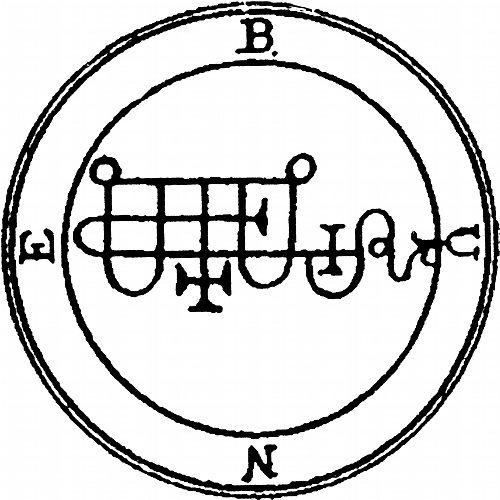
Bune

Recently, I did a conjuration of Bune, using the method laid out in Strategic Sorcery by Jason Miller. As part of a deal made in that conjuration, I am broadcasting the name of the Bune far and wide, and just how awesome he was. He fulfilled my desires with no problems, and brought me the finances I requested. If you are looking to conjure a spirit and need help with monetary issues, you should go and conjure up Bune.

http://en.wikipedia.org/wiki/Bune

Audhruna – Runes of Wealth

Lately, I have been focusing a lot on wealth, money and prosperity and financial magic. Most people seem to have been affected by that economic shift that has affected the United States over the past year. While it seems the low point has passed, we have not yet a satisfying middle for most people. This of course has many people scrambling, and a lot of magical folk that I know are often turning to some kind of money magic to help them out. Being of a practical bent, this is something I have been working on for a while, and while I am not the Donald Trump of Occultism, I do have some opinions and experience of it.
Two of the books that I have read recently that focused on financial magic are “The Sorcerer’s Secrets” by Jason Miller, and “The Witch’s Coin” by Christopher Penzcak I have to say, in some ways these two books represent very different ends of the magical spectrum about magic and money. Jason Miller’s work I would have to say is the more “practical sorcery” side of the financial magic spectrum. Christopher Penzcak is more representative of the “spiritual relationship” with money. Both have useful ideas, and techniques, and I think people of all sorts would be benefited by reading both, and doing the exercises they find within, and utilizing the spells and techniques.
One of my first comments, when it comes to money magic, is that almost absolute necessity of creating a “money altar.” I put that in quotation marks, because it doesn’t even necessarily have to look like an altar, but you should have a special place where you do money magic, whether you are a professional with clients (where you could also work money spells for them at the same location) or a amateur or hobbyist of some kind (which means you don’t necessarily market your magical skills to others, but you do practice magic). I say this because dealing with finances and money is something you are going to do for all of your life, in some way shape or form, and by creating a relationship with it that is inclusive of spirituality, it gives you a center and focus for dealing with finances. This altar will be the where you work your money magic of all kinds; keep most of your curios and items for money magic.
There are several types of money magic. The most basic and familiar kind can be called “Money-drawing.” This type of magic is about bringing money to you, however that may occur. The next type can be called “Money Protection.” This type of magic is about savings, long term investments, protection from theft, scams and fraud, and managing finances. The next type of money magic can be called “job magic” (although I think the word “job” is a dirty three letter word. I usually prefer employment or work.) This magic is about finding, getting, and keeping a job, with some work place related spells aimed at influencing co-workers, management and work environments. The final area of money magic can be called “gambling magic” and is aimed at magic to influence risky endeavors, which can cover everything from slot machines and poker games, to high-risk investing, and investment in new ventures, like film and television. At least the first three should be represented on your money altar, with the fourth one (gambling) maybe being present, if that is something you do, or are good at. I myself have no ability at gambling, and so I don’t pursue it. There is one other area of related to money magic, which can be called “debt collecting.” It is about money, but more so about influencing people to pay their debts to you, and to give you what they owe you, but if the other three are going well, this one isn’t really a major consideration.
Of course there are runes that relate too many of these areas of magic. With bindrunes, any rune can be combined together to make an audh-stafir (or rune of riches). There are specific runes that deserve mention that are good for money magic. Looking at these, some people may disagree with me, and other works may also present different runes. The ones I am presenting are the one that through my work, have made it clear to me that they are more related to financial magics then anything else.
The first one is Feoh/Fehu. Feoh means Gold in most academic translation of the various Rune poems. Somehow, some people decided that meant “cattle”, but gold seems to be the basic meaning. Just about every book out there most rune types will point you to this rune for wealth. It’s true. This rune does seem to draw wealth to you. However, easy come, easy go is the saying. Feoh doesn’t keep the money with you. It seems part of the nature of this rune is that one you have the money, you will start spending it, and using it. So don’t stop with it, if you have bigger plans then just being everyone’s best friend at the bar.
The second financial rune is Gebo. The name of this rune means “gift” and that is exactly what it is. But it ain’t a free gift. That is, there are certain obligations and responsibilities that come with that gift. I, personally, don’t use this rune much because of it. In this day and age, Gebo is more like contracts, agreements, and business deals. There is an exchange between two parties, and so long as the agreement is kept, it will work out. The breaking that contract made with Gebo can have serious consequences. It is a good way to get people to keep their work, or follow through with a contract, whatever it maybe.
The next financial rune is Jera. Jera means “year” or “Harvest” usually a good year and good harvest. This rune is about Long term financial magic. It definitely means work, but it is work that pays in the end, if you were keeping at it, much in a sense, like a farmer tending his fields and reaping a good harvest for his efforts. If you do work Jera, it should be worked within a defined time period, generally more then a month. At the end of that period, if you want to continue with Jera, you need to examine your previous spell, and make changes. Don’t work the same spell twice, although an on going spell can be worked, so long as the elements that need to be renewed are simple, like candles or offerings.
The next rune is Peorth. “Peorth!” I can already here some people saying. Yes, Peorth. This is, of course, the rune for gambling and high risk financial magic. The Anglo-saxon poem strongly associates it with games of chance, and so it can be used to help with those risky investments. Often, its best purpose is to knowledge about which investment will pay off, but it can also be used to work chance and gambling luck in your favor. Another way to use this rune is also in the locating of hidden treasure. To me, part of the meaning of Peorth is that it actually refers to the dead, who are living it up in their afterlife. Sometimes they can be petitioned to give up their wealth, and so, hidden treasures, and buried valuables might be revealed. By the way, this is for the dead that you are not related. For your ancestors wealth look to Ethel.
The following rune is Berkana. Berkana is the rune of Growth and nurturing of things to help them grow. While most people think of plants, babies, animals and pregnant women, this growing and nurturing can also be about your finances, savings and money. Berkana clearly belongs to the area of money protection, as it is more about money you already have, and are trying to improve. It grows the money, while also protecting it. It is not fast to act, and it does need “a seed” to start with. So, once you get the money from Feoh, start working Berkana to see it grow.

The next rune for money magic is Ehwaz. Ehwaz isn’t completely a money rune. Its name means horse, and while horses are often the mark of the wealthy, and also gambling related, one of its most common uses is to speed things up. This rune, when combined with others, is for emergencies, or Fast Money. Sometimes, Shit Happens. When you need it, and you need it NOW!!! Ehwaz is the rune to use.

Inguz is the next financial rune. Its name refers to one of the epithets of Freyr. In most descriptions, they talk about an image of him being paraded around the lands of Northern Europe, and how he brings fertility to the land. That Fertility is often the quickening of growth of fields, so that food for people and for livestock can be provided. Money magic wise, Inguz is the “active” counterpart to Berkana. Savings, investments, Trusts, where money is placed and is secure, but it is also actively being used, often with higher interests that are paid. This can also be about money that is used for endeavors that will pay off. Education is one very clear example. Enchant your tuition checks, for investing in your future, so that when it ripens, you can be ready to reap the benefit.

Ethel is the rune of ancestral property. This rune is about inheritance, and property. This rune can also be about calling up the skills of ancestors, which are inherent in you, to aid you in your work, if they are related. I might also suggest that you have a good relationship with your ancestors if you are going to do this. It is also a way, that by working with ones ancestors, and giving thanks and veneration for their aid, they can help you directly, by helping you in your work, financial management, and income. After all, if you are pursuing a relationship with them, it will benefit them, to benefit you. Make sure you show gratitude. On the other hand, when it comes to property, this rune is also invaluable, as it helps with real estate investments, and development. It also works well in your personal real estate, your home, whatever that may be.

This pretty much covers most of the runes that deal directly with money and magic. There are some other runes that deserve mention. While not money related per se, they can be worked with financial magic for particular situations or gain. Os the rune of Gods and of the mouth, is really great for those who work in environments where what they say helps them to make their money and succeed. It is also good for any other situation where speaking might be needed (interviews, asking for that raise or promotion etc…). Wunjo(Joy) is good for influencing work environment, to help it be productive, peaceful and pleasant. Eohlx (elk-sedge) and combined with other runes are well suited for money protection, as this is the main protective rune. Protect your wallet, savings, job, reputation, home, investments, you name it, it can be protected. Sowelo(sun) is a great rune to spur on success, aiding you in a number ways to excel. It can also make you “shine” more and let prospective and current employers see you in a more beneficial light. When it comes to money management Teiwaz(a god of justice and judgment) and Mannaz(man) excel in helping one to make decisions. They are also beneficial in seeing through scams, fraud, and pyramid schemes as well. Yr(bow) is the rune to use if you are involved with a craft or skilled trade. It will help you in your skills, and also help to gain respect for abilities. Kalc(chalice) helps one to assess ones skills and desires, and in doing so, seek the best vocation and career, as many people go through life, working, but doing so without direction. It can also bring about the glamour of desirability, helping you to gain employment, particularly if it is your chosen career field.

The previous are all runes that work well within the area of money magic. They might also be runes that are worth paying attention to when receiving a reading, and asking questions related to finances, money and employment, as their presence might indicate benefits or problems.

Of course, when it comes to financial magic, one should also be working practically with financial actions and management. What real world actions are you taking to gain money? If you are doing magic to get work, are you following through with sending out resumes, asking about opportunities from people, and checking the classifieds? Are you checking your investments, reading about changes in Wall Street, and knowing you are handling your money and how? If you are using magic to put a favorable wind at your back, you still need to open the sail, and steer the ship.

Divinatory Methods

In contemporary runic practice, the Runes are very frequently used for divination aka fortune telling or readings. I say contemporary practice, because there is no solid evidence of divination with the Runes. However, there is quite a bit of lore that indicates that runes were probably used for that purpose, mostly from mythic sources. The sagas indicate runes being used, usually for magic, and sometimes that magic would be divinatory in purpose, but the runes were incidental to the magic, and not the main focus.

The most often quoted example of “runic divination” actually comes from a Roman historian, named Tacitus. In his history of Germania, he makes note of their method of performing lots. However, his language does not explicitly indicate the Runes only that symbols were carved in piece of wood from the branch of a fruit bearing tree, and from those symbols, answers were given from the gods. This method does work very well with the Runes however, and I often use an adapted version for readings with the Runes.

Other methods are derived from tarot, where a specific layout is used, often named after a mythic figure or symbol, or associated with cosmological forces and patterns. The simplest of these is the One Rune or the Odhinn’s Rune, where a single rune is selected and that answers the question or gives insight to the issue being asked about. This method works well for either “simple” yes, no or maybe answers. The yes answer would be an upright figure selected, a no would be an upside down figure selected, while a maybe would be any of the “non-invertible runes” with the maybe being explained more depending upon the meaning of the rune.

Another common version of a layout is the 3 Runes or the Norns Spread, named after the etin women who gather around the well of Urd (Wyrd in Anglo-Saxon), watering Yggdrasil with the well water, and patching it with white clay, who are also the mistress of Fate, or Wyrd. Their names are Urd, Verthandi and Skuld (or Wyrd, Metod and Skuld in Anglo-Saxon). When it is called the Norn’s spread, it is specifically used for looking at the past, present and future, while other values can be used for the three runes. These values are often connected in some way, such as Body, Mind and Soul, or Seed, Plant, and Fruit.
The final method of divination is based upon working magic with the runes that make information known to you. There are numerous ways to do this, from focusing on certain runes to bring you into contact with knowledgeable entities, or beings that possess the information you seek, such as contacting Gods or spirits, to summoning up the dead to ask them questions which they would have had the answer to. You could also work to travel metaphysically, popular known as astral projection, but in northern tradition it has the name hamfaring, referring to the part of the being known as the hamr (shape) which can travel from the body, which can then go seek the information that you desire.

Mythic Origins of the Runes

According to the Lore about the origins of the Runes, they are clearly placed with Odhinn, the primary deity of the Aesir, the most human-like of the Northern tradition Gods. The story of his gaining the runes comes from a literary work known as the Havamal (The sayings of the High One) which relates the story. I highly recommend reading a translation of the Havamal for you, as I will relate a shorter version of the story here.

According to story, Odhinn took his speak, and impaled himself upon Yggdrasil, the World Tree. For 9 days and 9 nights, without food or water, Odhinn hung from Yggdrasil, “a sacrifice of himself, to himself” (as many of the human offerings to Odhinn were hung from a tree in a similar manner). At the end of the 9th night, Odhinn perceived the runes at the roots of Yggdrasil, and reached out, grabbed them, falling from the tree as he did so.
The High One (presumably Odhinn) goes on to explain some of the techniques of working with Runes, and also the 18 spells he knows made of Runes, which cover a number of maladies and situations that might be experienced. While many other authors have theorized runes to these sections, or even created their own Futhark based upon this section, it is my suppositions that these are independent spells that are worked with combinations of runes.
It is from this source that all runic knowledge is given, especially the more esoteric or magical runic knowledge and practices, for all the Futharks.

A brief history of the runes

A brief history of the Runes.

The Runes are a script that appears in Northern Europe. It appears to have been developed as the letters of the people of the areas that are now known as Germany, Denmark and Sweden. The earliest surviving material has been dated to 200 CE (aka AD) from those areas. Later finds show the spread of this script following those people to Frisia (now known as Netherlands) and then to England, and also going to Norway and then Iceland. There is no agreed upon theory as to the actual roots of the Runic script, why it was invented, or who invented it, but there are many theories, some looking to Greek or Roman influence, and some supposing a purely native invention, but there is not much evidence in support of any of those theories.

As the runes spread from their most likely origin, changes in culture, society and language prompted changes in their alphabet and script. The earliest complete Rune Alphabets show 24 letters. As the runes journeyed through what is now the Netherlands and to England, it gained additional letters, as many as 33 letters that were added to it. As the Runes crossed the North Sea into Norway, where literacy was not as prevalent, they reduced to 16 letters. This remained the case as explorers found Iceland, one of the last areas to lose their runic and pagan practices. This created at least 4 identifiable runic scripts or Futharks (named for the first letters of the script). They are known as the Elder Futhark (which is the oldest) The Anglo-Saxon Futhorc (found mainly in England and Netherlands) and the Younger Futhark (which has two bodies of lore attached to it, the Norwegian Rune Poem, and the Icelandic Rune Poem).

During the late 19th century and the early 20th Century, there was a runic revival, as interest in historical roots of ethnic culture flourished. During this time, a man named Guido Von List (among others) explored metaphysical and philosophical meanings to the Rune Alphabet, proposing various philosophies. Guido Von List also created his own Futhark, based upon the Havamal, a piece of poetry, which described the mythic origin of Runes by Odhinn. What became known as the Armanen Runes contained 18 runes, with a variety of meanings. This rune row was also picked up by German Nationalists who would later join the Nazi party. Because of that very unfortunate period of German History, the runes as a whole were forgotten in Europe for a few decades, although a few groups from before WWII revived their studies and practices.

In the modern day, the most often used Futhark is the Elder Futhark. Many books about Runes focus on the Elder Futhark. While the Elder Futhark is shown to be the oldest Futhark, it has the least body of lore attached to it, as most other lore focuses on Anglo-Saxon Futhorc, or the Norwegian and Icelandic Futharks. As various groups focused on Northern spiritualities of various traditions grow and prosper, more lore, information and wisdom about the Runes becomes available.