Tag Archives: runes

C is for Cenaz

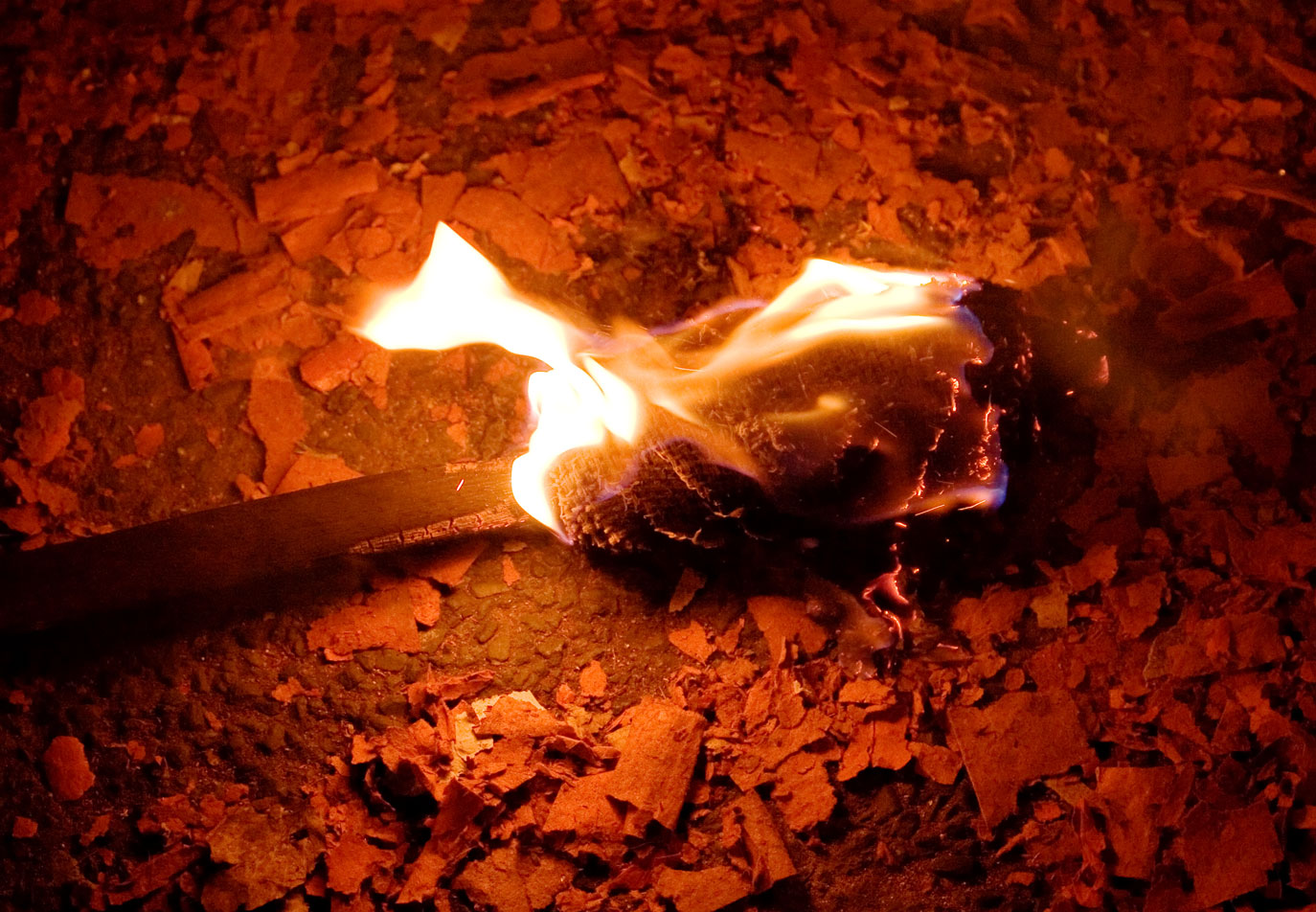
Lewes_Bonfire,_discarded_torch

The rune I like to attribute for the letter C is Cenaz, or just Cen. The symbolism associated with Cenaz is the torch, a piece of wood or metal, that often has some kind of extra fuel source attached to one end, with that fuel source is often some kind of textile that has been soaked in some kind of accelerant or flammable chemical. This allows the torch to be carried around to shed firelight in dark places, either inside buildings that didn’t have windows (and thus no natural light) or in caverns.

As indicated by the symbolism of a torch, this rune is about fire, and light, and things being revealed. In this case though, this is the fire that has been tamed by humanity (unlike qweorth), the light that is wielded by humanity (unlike sowilo), and what is revealed is what is sought by humanity. This colors my interpretation of Cenaz as being the light and fire of humanity, our inspiration, our drive, our passions, that which makes us burn, ignite and shine. While a common symbol for learning, knowledge and education is the lit oil lamp, a symbol that is very Mediterranean, the northern European equivalent would be the torch. You could also extend it to the forge as well, as that is the fire that is harnessed and controlled to create and make things for use by humanity, from basic metal tools to weapons. But that flame is also metaphorical, the flame of passion, the fires of creativity, that spark of an inspiration that sets people on the path to making, making anything from prose to computers.

As I’m writing this, I’m alternating with videos on YouTube, and it occurred to me that these things, music videos, lectures, comedic gags, are that spark of Cenaz at work. Someone had that idea of creating something that would be filmed and made into a video, to express something, or share information that is important to them, or even just to create a laugh, a moment of joyous catharsis. The flame of Cenaz is shining there, revealing something from the creator, but also revealing something to the audience.

My own experience of the spirit of Cenaz was that he was a slim figure, with bright red hair and pale skin, with features like fantasy elves. He was elegant, but crafty and clever and quick with words.

A ritual for Cenaz

what you’ll need
-a red candle
-a candle holder
-any kind of oil that is scented with cinnamon
-a small slip of paper
-red pen

take the slip of paper, and with the red pen, draw the Cenaz rune on it. Then take the red candle, and with a metal implement (pin, needle, nail) carve a Cenaz rune also into it. Anoint the candle with the chosen oil. Some options could be Fast Luck, or Abramelin oil, or a personally made oil that uses cinnamon. Place the candle in the holder, and set the holder on top of the paper. Light the candle, and as it burns chant to your self the name of the rune Cenaz (the C is a hard “k” sound) 9 times. Imagine the flame of the candle beaming it’s light into your eyes and our third eye, and that light sparks a flame inside you. That flame reveals things inside you, revealing your passions, revealing ideas and thoughts for things to do and make, revealing artistic pursuits of all kinds, to forgotten knowledge, events or memories that could be of a benefit to you know. Do this for about 15 minutes. Then snuff the candle with your fingers or a candle snuffer. Repeat this for 7 days in 15 minute increments, until the last day when you should let the candle burn out completely, although before you do so, take the paper form underneath, and burn it in the flame, putting into a fire safe container to burn until it is consumed. Dispose of the ashes by the entrance to your home or building of residence.

B is for Berkana

Because I spent I good deal of time talking about two other runes that relate to trees, it only feels appropriate that the only B rune should be talked about.

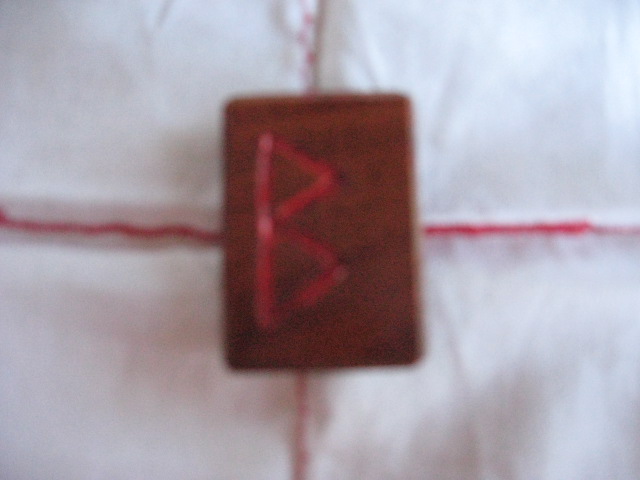
Berkana

Berkana is often translated as birch, a tree that most people are probably passingly familiar with. It has white bark, which often is seen peeling off during certain parts of the year, which seems similar to some kinds of paper, and in fact people did use to write on birch bark for somethings and probably still do, I think it is the white bark of most birch trees that probably stands out the most in my mind, as that much stark lack of color is very distinct, especially when it is off set with many green leaves.
birch-tree1
The esoteric symbolism of birch and berkana is what is usually focused on. The meanings that I have always ascribed to it is growth, healing, nurturing, becoming, life changes, and liberation. My own meditations and journeys with this rune have pointed to the powerful feminine influence. My own experience of the spirit of Berkana is as the Birch mother, female spirit with pale skin and green hair, who dwells in a endless forest of birch, with light shimmering through the leaves of the forest.

In part of the tree pattern that seems apparent in the runes, Berkana is the world tree as the generative, creative aspect. In the history of the world, the birch was the first tree to emerge in open areas, quickly turning an area that was an open meadow into a forest, and as the glaciers retreated further north, birch trees would continue to follow, while other trees may then fill in the areas that had once been filled with birch. In the Anglo-Saxon rune poem, it is even described as just growing from suckers that the parent tree spread from it. Although now days research has shown that is not actually a birch tree or a member of the betula family, the concept of prodigous generative power carries forward in the rune.

Runes of Love

IMG_0001

Love spells! Everyone wants love spells. When it comes to doing magic, often time when clients come many a reader, sorcerer or spiritual worker, they are looking for love, either to get new love, re-gain love that has been lost, or move a current love into a new situation, such as marriage. Of course, part of the field of Love spells, also includes spells that promote harmony among people, from married couples to families and communities.
It often seems to me that Love magic is the ignored part of working with runes. Maybe a footnote here, or a value given there, but in many books dealing with runes and rune magic, Love is often overlooked, although that maybe the prior trend of the “unpopularity” of love magic with the Neo-pagan movement. However, it’s pretty clear from some surviving written lore, that spells that promote love and harmony were definitely part of the Northern Tradition. I would like to turn to the Havamal in this case, and the runes described by the speaker.

The first stanza that identifies a spell dealing with promoting love (or in this case harmony) is the stanza of the eigth rune:

An eighth I know: which all can sing
for their weal if they learn it well;
where hate shall wax ‘mid the warrior sons,
I can calm it soon with that song

Where the hate and conflict among kin can be soothed through singers magic skill. The second stanza identifying love magic is the sixteenth rune:

A sixteenth I know: when all sweetness and love
I would win from some artful wench,
her heart I turn, and the whole mind change
of that fair-armed lady I love.
And the seventeenth:
A seventeenth I know: so that e’en the shy maiden
is slow to shun my love.
Being the clearest examples of what is recognized as love magic. Of course the singer indicates his mastery in the this art, as he is able to win the love of not only other skillful women, but even young shy women who are often harder to obtain.
To this end, I looked to the runes, seeking and identifying which runes resonate with the powers of love, harmony, and relationships. With my research I identified nine runes, which can be worked, separately or together, in master the arts of love magic.

In the ordering of the futhorc aettirs, the first rune identified is Kenaz. Kenaz, the torch, is the fires of passion. They ignite the feeling inside, a flame that reveals the desires, but also burns. The burning passion leaves little peace, until they have been satiated.
The next rune is Gebo. In Gebo we see the exchange of relationships, partnerships, the agreements, the contracts, the idea of dowry, union of people and the rules that govern that union. Gebo is the most unromantic side of love magic, the side that comes after “and they all lived happily ever after” which people often want to forget. It is having the skills in this side that make relationships succeed or fail, and being able to manage the give and take successfully will often help in being successful in whatever partnership is entered into.
The third rune of love is Wunjo. Joy is it’s name, and joy can be a wonderful, if temporal thing. This is one of the first runes I identify with harmony among people, although in this case it is usually familial harmony. The conflicts between spouses, between parents and children, between siblings, can all create a very unharmonious and dissonant environment. Wunjo is the joy and peace of happy family, and a happy familial home. It’s dark side can be the grasping for this temporal thing. When everything is sacrified, just so that one can maintain the illusion that life is free from strife, the grasping for joy can become a toxic quest, and the peace is shallow, and soon shattered.
Interestingly enough, a whole aettir is skipped here. I studied this for a while, but part of my understanding of the second aettir, the aettir of Hagal, is that it is the runes of warrior, and conflict. While there are runes here that might be useful in influence and command (which has sometimes role in the world of love spells) they are not really concerned with love per se, but with having influence over other people, to any end.
The fourth rune is Berkana. In Berkana is the love of a mother for it’s child in sense. It is nurturing, supportive, and steady. It is also powerfully feminine, which can be somewhat hard to describe exactly how. It is the rune of Women, and express the powers of women, not just girly, but also Amazonian. The mysteries of Women who Love Women are found in this rune, which has it’s own draw, but it can also be used by women to draw whatever kind of love they desire, especially when combined with other runes, or to heal a womans sexual nature, if it has been damaged or cursed.
The fifth rune is Mannaz. In Maanaz, there is the coming together of equals, or rather the marriage of equals. While the rules of marriage belong to Gebo, means of relating to each other are found in Mannaz. This marriage of equals also governs friendship, the brother and sister-hood of humanity. This rune promotes the harmony of whole communities, but also individual people. This is love without lust, just a simple affection, which flows out from within. The idea that comes to me is that deep within each person, there is Love, and when this love is allowed to expressed freely, without expectation of return, or demands, is when people can get along innocently.

The sixth rune is Inguz. As Berkana is to feminity, Inguz is to masculinity. It is a great power, that lies dormant, until it is triggered and released, bring strength and setting change in motion. It can be aggressive and rough when needed, but mostly it is strong and solid. It is the rune of Men and in many ways directly relates to the phallus. It is not only the usual masculine stereotype, but also the gentle man, who can be strong, but sensitive. It also contains the mysteries of Men who Love Men, but it can be used by all men to attract Love, and also sex. It can also helping curing the damaged sexual nature of men, whatever their orientation.
The seventh rune is Ac, the mighty Oak tree. In the permanence and endurance of Ac is fidelity, the ability to stay the course and endure the trials of Love. While many love spells used to promote fidelity were the domain of women who livelihood often depended upon the fidelity of their husbands, who if they could get to stay at home night, at least to make sure they come home when they are done. Fidelity is also about staying together, “for richer or poorer, in sickness and in health.” Sometimes the stress of living can sow the seeds of discontent between partnered couples, and it may take the patience of the partners to rise above their own trials, and embrace their partner(s). In exchange, it also buries jealousy, as I was taught growing up that “jealousy is the grave of affection” and being able to stand fast by your partner, when perhaps they are succeeding, and your own efforts are impeded or faltering can be a difficult thing.
The eighth rune is Ior. Ior is the rune of boundaries and finding happiness within those boundaries. Sometimes, that happiness is found by transgressing what is perceived as binding us, but sometimes it is also recognizing that boundary helps us to nurture ourselves and find our own happiness, wherever it maybe. Happiness is an amorphous thing, and constantly changes. What feeds your happiness today, is not what fed your happiness yesterday, and may not sustain your happiness tomorrow. Being able to change, adapt, and move between environments, elements, or even worlds is a survival skill, that opens up opportunities to find new resources that can sustain you.

The ninth rune is Khalk. Khalk is the cup of desires, the loving cup which contains all that one can want. Contained within the wondrous draught is the fulfillment of our hearts content, yet the difficult part is getting the drink. It can show you what it is you really seek, from this person, from this relationship, from this moment, but it can also make you that which is sought. Glamor was the popular word used for such thing, the magical gilding which brings out the best in each person, showing them as the desired prize, yet keeping it just unattainable enough that they want it all the more. Khalk proves the desire is not about being the best looking, but having the confidence to show your worth.

Having worked with these runes in love magic over the past couple of weeks, I can tell you, yeah it works, quite well. My first experiment was working with each rune, to see how they would manifest. Over the course of nine days, combining the runes with other love-drawing methods (red candles, condition oils, and galdr) those nine days were some of the more interesting escapades in love that I have had.

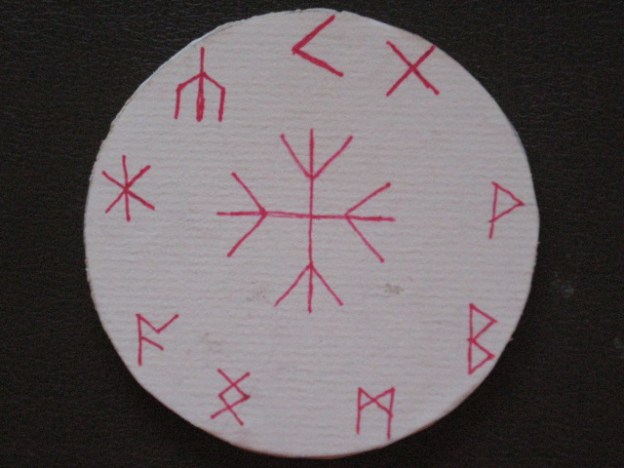
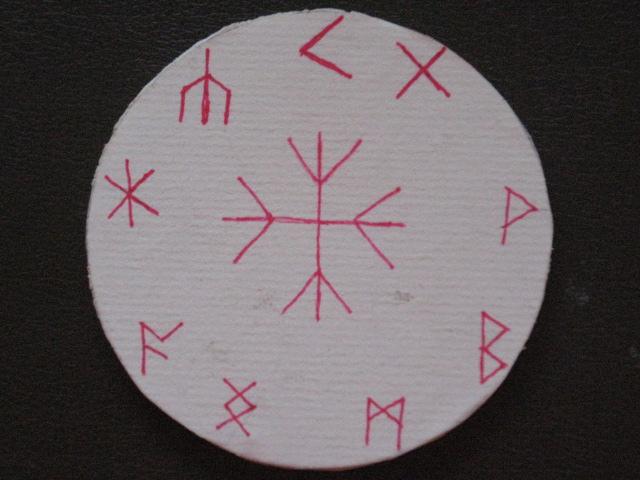
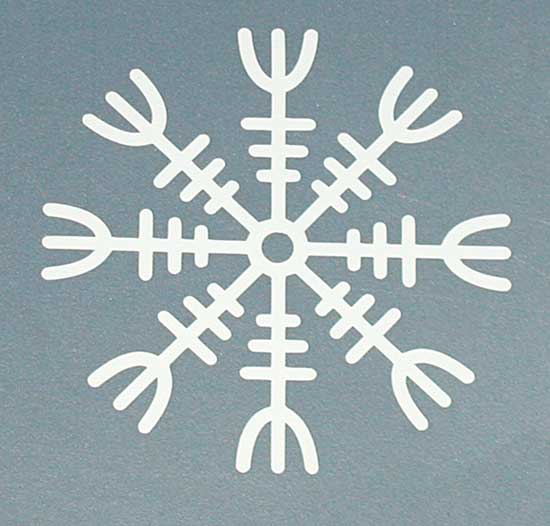
The image with this post is a Love rune talism that I created when working with this, a simple disc with the runes inscribe in a circle around. The image in the middle is an aegishjalmur described in the Icelandic grimoire, that will get you the love of the person you desire.

Aegishjalmur

aegishjalmur

The Aegishjalmur or Helm of Awe is probably one of my favorite symbols from the Northern Tradition. It is one of the magical signs that have many forms and seems to appear often, especially in the Icelandic galdrbok as a means to gain many things, from stilling anger, to winning love, or just having the favor of men or removing anger. Some variants are very simple images, others are as complex as solomonic and goetic talismans in their imagery. I personally have a preference for the simpler ones, mainly because they are much easier to inscribe on a multitude of surfaces.

The helm of awe is even mentioned in the sagas, probably the most famous saga, The Volsungasaga. The dwarf turned dragon, Fafnir, bears a helm of awe, which is one of the means that he keeps his suspected foes away from the treasure that he has accumulated.

Later, in the galdrbok tradition, it is suggested that the aegishjalmur symbol be made into lead and pressed between the brows, or using spit, drawn on the forehead. One version has an incantation that reads

“It is the helm of awe that I bear between my eyes-wrath runs away, strife is stemmed. May every mother be delighted with me as Maria was delighted with her blessed son when she found him on the rock of victory, in the name of the Father, and the Son, and the Holy Spirit” followed by “ Olvir, Odhinn, Evil One/ All will you bewitch! / May God himself, with skill/ Send love between us two!”

This was used to still wrath, but also could be used to bring love.

A variant aegishjlamur was named Solomon’s Insigli aka Solomon’s sign and was used for protection.

The main purpose of the Helm of Awe in my works is for success, victory, mastery and favor. You could use spit and other traditional means to place it upon your brow, but you can also use relevant condition oils (such as Crown of Success, Master or High John the Conqueror).

A simple Aegishjalmur spell for success could consist of the following:

A yellow candle (for success, victory and favor)
Crown of Success condition oil
Crown of Success sachet powder
Crown of Success incense
A piece of paper (parchment paper or hand torn brown paper)
A red pen
A pin or needle
Quick lighting charcoal
Incense holder

Light your charcoal.

Take the piece of paper, and using the red pen, draw the aegishjalmur symbol on the piece of paper. Sprinkle a small amount of sachet powder on the paper and symbol, and then retrace the symbol with your left index finger. When you finish, snap the paper to remove the sachet powder.

Take the yellow candle. With the pin or needle, carve the aegishjalmur symbol into the candle. Dress the candle with Crown of Success oil, and place it over the symbol and paper. Put some incense on the charcoal. As it is smoking, using spit or oil, make the draw the aegishjalmur on your forehead, when completed say:

“The Helm of awe is upon my brow. Let all people look upon me and hear my words with favor, as the Lord looked upon his creation with favor, that I may succeed in all my works. So It is!

Light the candle and let the candle burn down to completion. After it has burned out, carry the paper with you in your wallet or purse, as talisman for success and favor. If you desire, you can take the talisman and press the symbol to your forehead and repeat your incantation, while you are out to strengthen the aegishjalmur.

Runes of Air

The element of air is not very apparent in the natal cosmology that the runes sprang from. It is just kind of there, and everything that inhabits it comes about later. For that reason, there is very little clear relation to the element of air in the runes, although using some investigation it is possible to make connections between some of them.

In various books about runes, you will find some of the following runes listed as connected to the element of air. They are:

Os/Ansuz, Raidho, Gebo, Eohlx/Algiz/Elhaz, Tiewaz, Mannaz and Yr

Some of these are related esoteric symbolism (like Eohlx which quite a few relate to Valkyries, which fly about in the air, or Mannaz which has connections to the mind and thus the mind/intellect/air connection). Others are directly related like Os/Ansuz which is about the mouth, and thus the movement of breath through the human body. Tiewaz could also fall in this category as it’s rune poem reference both mists of night but also the means to be guided through them, IE the stars in the heaven.

For myself, I have a slight longer list of runes, based on a greater perception of what makes up interaction and relationship with air and both it’s physical and esoteric qualities.

Here is my own list.

Thurisaz, Os, Raidho, Wunjo, Nauthiz, Jera, Iehwaz, Eohlx Tiewaz, Ehwaz, Mannaz, Dagaz, Aesc

I attribute Thurisaz because of the associations it has with violence and misfortune, but also with power. It is a fickle rune, and so Air is a fickle element. It is not always the gentle breeze, but sometimes the terrible storm and hurricane. It can be the breath of life, or the poisonous gas that takes life away.

Os is given because it is the mouth, and the words that come from it, bringing wisdom or folly. It also connects to breath, and to song.

Raidho is given because it is the traveling and wandering nature, always moving, always restless. In most forms of travel is is always good to have the wind at your back.

Wunjo mainly because of the sound of the name. It just sounds windy and airy. I can also see an symbolism in the comforts, the joy, the deep breath of calm and relaxation in prosperity and ease.

Nauthiz I give for reasons similar to Thurisaz. The challenges and obstacles of need are often symbolized by the power of air and it’s challenges, but also the method of resolving them lies in the preparation by planning and mindfulness, which can help to overcome them

Jera I establish because of the rune poem mentions the King of Heaven. While it could be a reference to Christianity. The idea of harvest, season and summer and the warm air and light that fills it as blessings from Heaven and thus being communicated through the air. This also just adds to the complexity of this rune.

Iehwaz, the yew tree, is another one of those mysterious and complex runes. While I don’t give all the trees mentioned in the runes to Air, there is a connection I feel that comes from the high reaching branches of trees to reach up. Yew also being identified as one of the trees of Yggdrasil, which reaches from the underworlds up into the heavenly realms.

Eohlx I also give as an air rune because of it’s potentially violent power, as the rune poem mentions the elk grass as being able to cut people who handle it roughly. Air also lends itself to protective magic that is more aligned with the watchful guarding nature of Eohlx

Tiewaz I give for the reasons already given above. Stars, mists, and the wisdom and guidance that Tiewaz imparts

Ehwaz is the other side of the moving runes. Instead of the wandering nature of Raidho, Ehwaz is the fast paced speed of movement. It is more direct and blunt then Raidho, because it channels everything into the direction it is moving to get there quickly. It also has symbolism to loyalty and trust, what I see as the ideals of air.

Mannaz as the rune of the mind, and also of friendship and connection based upon the rune poem. It also has the tragic element of the absolute end of all connections, death, which I see as the ability of the mind to contemplate all things and thus be prepared to deal with all events.

Dagaz as the rune of Day, while it is strongly a rune of light, it is also the medium which light passes through, namely air and the bright airs of daytime which serves to inspire hope and happiness.

Aesc the ash tree, another world tree, but this one I associate with the upper worlds. The ash grows high, and the particular powers of this rune seem to be about inspiration and enthusiasm, the descending powers of the gods as they flow into us, bringing prophecy, insight and perhaps madness. It is a rune that connects to the Divine Mind, the Nous or Wod, and be filled with divine possession.

As I indicated before, Air is one of those invisible elements in the northern cosmology. It is always present and yet never really talked about or focused on. Only in it’s particular manifestations as winds or breath, mists or odors does it make itself known. Finding runes of air is a challenge, as it requires interpreting symbolism and meaning and application in many ways of what air can symbolize, how it flows and acts, and it’s deeper esoteric possibilities.

Runes of Fire

Fire elemental power can be seen in different ways, which include and exclude various runes depending upon the way it is perceived. In some of the earlier works about runes, the following runes were given the qualities of fire:

Feoh (primal fire), thurisaz (destructive fire), kenaz (helpful and illuminating fire), nauthiz (needfire), sowelo (sun), dagaz(daylight)

Another method of looking for the qualities of fire is by referencing the various rune poems, for example, in the Anglo-Saxon rune poems the following runes mention fire or flame or flame producing items

Kenaz, (the torch) Eihwaz (a guardian of flame) and qweorth (the fire twirl)

These two are the most common methods by most people of connecting with fire through the runes. After spending some time in contemplationg on this, I came to a third conclusion. The runes of fire by quality. In this case, it has to do with the qualities of fire. Things like radiance, heat, light, will, passion, destruction, are all qualities of fire, qualities which are also reflected in a multitude of runes. Some of these qualities might be more relevant to specific acts of magic, seeking the illuminating quality of fire instead the heating expression might be more useful in a spell to reveal things.

Kenaz – the fire of illumination, passion, inspiration, knowledge
Hagalaz – destructive fire
Sowelo – Fire of radiance, light, warmth, success, victory
Eihwaz – protective fire
Ehwaz – speed, action, impulse
Dagaz – renewing transforming fire
Tiewaz – starlight, heavenly fire, guiding light
Qweorth – sacred fire, holy fire, essential fire

You could also create a bindrune that combines these elements into one sigil of elemental fire that could serve as a key and gateway to connect with the power of fire through the runes, and maybe also be the sigil that is an elemental fire ally that could help you to channel, connect and work with the power of fire.

Audhruna – Runes of Wealth

Lately, I have been focusing a lot on wealth, money and prosperity and financial magic. Most people seem to have been affected by that economic shift that has affected the United States over the past year. While it seems the low point has passed, we have not yet a satisfying middle for most people. This of course has many people scrambling, and a lot of magical folk that I know are often turning to some kind of money magic to help them out. Being of a practical bent, this is something I have been working on for a while, and while I am not the Donald Trump of Occultism, I do have some opinions and experience of it.
Two of the books that I have read recently that focused on financial magic are “The Sorcerer’s Secrets” by Jason Miller, and “The Witch’s Coin” by Christopher Penzcak I have to say, in some ways these two books represent very different ends of the magical spectrum about magic and money. Jason Miller’s work I would have to say is the more “practical sorcery” side of the financial magic spectrum. Christopher Penzcak is more representative of the “spiritual relationship” with money. Both have useful ideas, and techniques, and I think people of all sorts would be benefited by reading both, and doing the exercises they find within, and utilizing the spells and techniques.
One of my first comments, when it comes to money magic, is that almost absolute necessity of creating a “money altar.” I put that in quotation marks, because it doesn’t even necessarily have to look like an altar, but you should have a special place where you do money magic, whether you are a professional with clients (where you could also work money spells for them at the same location) or a amateur or hobbyist of some kind (which means you don’t necessarily market your magical skills to others, but you do practice magic). I say this because dealing with finances and money is something you are going to do for all of your life, in some way shape or form, and by creating a relationship with it that is inclusive of spirituality, it gives you a center and focus for dealing with finances. This altar will be the where you work your money magic of all kinds; keep most of your curios and items for money magic.
There are several types of money magic. The most basic and familiar kind can be called “Money-drawing.” This type of magic is about bringing money to you, however that may occur. The next type can be called “Money Protection.” This type of magic is about savings, long term investments, protection from theft, scams and fraud, and managing finances. The next type of money magic can be called “job magic” (although I think the word “job” is a dirty three letter word. I usually prefer employment or work.) This magic is about finding, getting, and keeping a job, with some work place related spells aimed at influencing co-workers, management and work environments. The final area of money magic can be called “gambling magic” and is aimed at magic to influence risky endeavors, which can cover everything from slot machines and poker games, to high-risk investing, and investment in new ventures, like film and television. At least the first three should be represented on your money altar, with the fourth one (gambling) maybe being present, if that is something you do, or are good at. I myself have no ability at gambling, and so I don’t pursue it. There is one other area of related to money magic, which can be called “debt collecting.” It is about money, but more so about influencing people to pay their debts to you, and to give you what they owe you, but if the other three are going well, this one isn’t really a major consideration.
Of course there are runes that relate too many of these areas of magic. With bindrunes, any rune can be combined together to make an audh-stafir (or rune of riches). There are specific runes that deserve mention that are good for money magic. Looking at these, some people may disagree with me, and other works may also present different runes. The ones I am presenting are the one that through my work, have made it clear to me that they are more related to financial magics then anything else.
The first one is Feoh/Fehu. Feoh means Gold in most academic translation of the various Rune poems. Somehow, some people decided that meant “cattle”, but gold seems to be the basic meaning. Just about every book out there most rune types will point you to this rune for wealth. It’s true. This rune does seem to draw wealth to you. However, easy come, easy go is the saying. Feoh doesn’t keep the money with you. It seems part of the nature of this rune is that one you have the money, you will start spending it, and using it. So don’t stop with it, if you have bigger plans then just being everyone’s best friend at the bar.
The second financial rune is Gebo. The name of this rune means “gift” and that is exactly what it is. But it ain’t a free gift. That is, there are certain obligations and responsibilities that come with that gift. I, personally, don’t use this rune much because of it. In this day and age, Gebo is more like contracts, agreements, and business deals. There is an exchange between two parties, and so long as the agreement is kept, it will work out. The breaking that contract made with Gebo can have serious consequences. It is a good way to get people to keep their work, or follow through with a contract, whatever it maybe.
The next financial rune is Jera. Jera means “year” or “Harvest” usually a good year and good harvest. This rune is about Long term financial magic. It definitely means work, but it is work that pays in the end, if you were keeping at it, much in a sense, like a farmer tending his fields and reaping a good harvest for his efforts. If you do work Jera, it should be worked within a defined time period, generally more then a month. At the end of that period, if you want to continue with Jera, you need to examine your previous spell, and make changes. Don’t work the same spell twice, although an on going spell can be worked, so long as the elements that need to be renewed are simple, like candles or offerings.
The next rune is Peorth. “Peorth!” I can already here some people saying. Yes, Peorth. This is, of course, the rune for gambling and high risk financial magic. The Anglo-saxon poem strongly associates it with games of chance, and so it can be used to help with those risky investments. Often, its best purpose is to knowledge about which investment will pay off, but it can also be used to work chance and gambling luck in your favor. Another way to use this rune is also in the locating of hidden treasure. To me, part of the meaning of Peorth is that it actually refers to the dead, who are living it up in their afterlife. Sometimes they can be petitioned to give up their wealth, and so, hidden treasures, and buried valuables might be revealed. By the way, this is for the dead that you are not related. For your ancestors wealth look to Ethel.
The following rune is Berkana. Berkana is the rune of Growth and nurturing of things to help them grow. While most people think of plants, babies, animals and pregnant women, this growing and nurturing can also be about your finances, savings and money. Berkana clearly belongs to the area of money protection, as it is more about money you already have, and are trying to improve. It grows the money, while also protecting it. It is not fast to act, and it does need “a seed” to start with. So, once you get the money from Feoh, start working Berkana to see it grow.

The next rune for money magic is Ehwaz. Ehwaz isn’t completely a money rune. Its name means horse, and while horses are often the mark of the wealthy, and also gambling related, one of its most common uses is to speed things up. This rune, when combined with others, is for emergencies, or Fast Money. Sometimes, Shit Happens. When you need it, and you need it NOW!!! Ehwaz is the rune to use.

Inguz is the next financial rune. Its name refers to one of the epithets of Freyr. In most descriptions, they talk about an image of him being paraded around the lands of Northern Europe, and how he brings fertility to the land. That Fertility is often the quickening of growth of fields, so that food for people and for livestock can be provided. Money magic wise, Inguz is the “active” counterpart to Berkana. Savings, investments, Trusts, where money is placed and is secure, but it is also actively being used, often with higher interests that are paid. This can also be about money that is used for endeavors that will pay off. Education is one very clear example. Enchant your tuition checks, for investing in your future, so that when it ripens, you can be ready to reap the benefit.

Ethel is the rune of ancestral property. This rune is about inheritance, and property. This rune can also be about calling up the skills of ancestors, which are inherent in you, to aid you in your work, if they are related. I might also suggest that you have a good relationship with your ancestors if you are going to do this. It is also a way, that by working with ones ancestors, and giving thanks and veneration for their aid, they can help you directly, by helping you in your work, financial management, and income. After all, if you are pursuing a relationship with them, it will benefit them, to benefit you. Make sure you show gratitude. On the other hand, when it comes to property, this rune is also invaluable, as it helps with real estate investments, and development. It also works well in your personal real estate, your home, whatever that may be.

This pretty much covers most of the runes that deal directly with money and magic. There are some other runes that deserve mention. While not money related per se, they can be worked with financial magic for particular situations or gain. Os the rune of Gods and of the mouth, is really great for those who work in environments where what they say helps them to make their money and succeed. It is also good for any other situation where speaking might be needed (interviews, asking for that raise or promotion etc…). Wunjo(Joy) is good for influencing work environment, to help it be productive, peaceful and pleasant. Eohlx (elk-sedge) and combined with other runes are well suited for money protection, as this is the main protective rune. Protect your wallet, savings, job, reputation, home, investments, you name it, it can be protected. Sowelo(sun) is a great rune to spur on success, aiding you in a number ways to excel. It can also make you “shine” more and let prospective and current employers see you in a more beneficial light. When it comes to money management Teiwaz(a god of justice and judgment) and Mannaz(man) excel in helping one to make decisions. They are also beneficial in seeing through scams, fraud, and pyramid schemes as well. Yr(bow) is the rune to use if you are involved with a craft or skilled trade. It will help you in your skills, and also help to gain respect for abilities. Kalc(chalice) helps one to assess ones skills and desires, and in doing so, seek the best vocation and career, as many people go through life, working, but doing so without direction. It can also bring about the glamour of desirability, helping you to gain employment, particularly if it is your chosen career field.

The previous are all runes that work well within the area of money magic. They might also be runes that are worth paying attention to when receiving a reading, and asking questions related to finances, money and employment, as their presence might indicate benefits or problems.

Of course, when it comes to financial magic, one should also be working practically with financial actions and management. What real world actions are you taking to gain money? If you are doing magic to get work, are you following through with sending out resumes, asking about opportunities from people, and checking the classifieds? Are you checking your investments, reading about changes in Wall Street, and knowing you are handling your money and how? If you are using magic to put a favorable wind at your back, you still need to open the sail, and steer the ship.
Galdr and Taufr (spells and talismans)

In the basic performance of magic with the Runes, there are two methods that are commonly used. They are known as galdr (or galdor) and taufr (or taufir). These can be simple summed up as spells or incantations, and talismans.

Galdr refers to spells, magic enacted through spoken words. In Old Norse, it also has connotations of singing, as the spells may have actually been sung or spoken in a sing-song way. As there are no existing records of how galdr may have been done, contemporary practices that I have found seem to point to two methods.

One method comes from Edred Thorsson, and can be seen in his book, Futhark: A handbook of Rune Magic. In describing the runes of the Elder Futhark, one of the things he notes is the runes Galdr. These are ways of chanting the runes name, as a means to attune oneself to that runes specific energy. This method is derived form Guido von Liszt, who developed a method of chanting runes, seemingly derived from Hindu practice of seed mantras. In Hinduism, there are seed word sounds, which have certain qualities associated with them. By combining these word sounds, you create a full mantra, for a specific effect. Liszt developed his own version, based upon his Armanen runes, which combine vowels and consonants. The vowels represent energies, while the consonants are forms. These are combined to create a galdr for a specific effect. Thorsson developed on this, extending the letters through the Elder Futhark. Then chant the combination to activate the galdr.

The other method uses poetry to write a spell. Using the symbolism of Runes and their meanings, are woven into the galdr, along with poetic devices common to Northern European peoples, namely alliteration (rhyming using the first consonant of a word) and kennings (inventive names used to describe things, people or places). These are then sung or spoken in pitch, to activate the galdr.

Taufr are talismans. Traditionally, they would have been carved on wood, stone, metal or bone. The talisman then serves as the focus of the magic, conveying its power to its target. The power of the taufr comes from the runes placed on it. The purpose of the taufr is determined by the runes placed on it. Some taufr can be generic for helpful purposes, like general luck or good fortune. Others might be specific, such as the Tyr/Teiwaz rune placed on a sword, to aid the user in combat. The sagas give examples of runes being carved into items, which then destroy the item, such as a cup, because the cup was filled with a poisoned beverage, or a special staff is created which delivers a curse upon foreign rulers, which will only end until they leave the country. Historical sites show place markers for property, as well as spells used to bind people to their grave, as the restless, harmful dead were seen as potentials for mischief and harm.

With the exception of certain archeological sites, we have little information about ancient talismans. Even the sites often leave little clues, except for when the magical uses of the runes are made clear, such as binding the dead to their graves. Contemporary practice does have quite a few methods as to how to determine Runes to create talismans. The easiest is with a single rune, which is alignment with your desires and intentions. For example, if you want to shed light on an issue, use Cenaz. If you want to freeze up some harmful actions, use Isa. This method can be expanded upon by combining runes for your intention. Like combining Feoh with Berkana, to gain money and nurture it to grow.

Other methods are based upon chaos magic techniques of sigil production. Writing your intention, eliminate all the double letters. Take the runic equivalent of those letters, and use that to create your taufr. You can also combine them into a graphic design, known as a bind-rune or sigil. This can be used as a means to conceal your intent from others (if you don’t want it known) and in trying to create a graphic that is aesthetically appealing, adds power and intent to your spell.

You could also perform divination, asking the runes for what to use. From using this method, I have had some surprising results, as the runes indicated may often seen unrelated to your desire, but often act upon internal and external energies to help bring your intent into physical manifestation. This is also an excellent method for creating Thorsson type galdr.

Once you have your runes selected, and you have carved them or placed them on the item, at this point a fluid is then placed upon them. Typically, it is a bodily fluid, blood or spit being the most common. A common substitute is alcohol (ale or beer, but even hard liquor) or red dye or paint, which stains the runes red (blood symbolism). At this point a short incantation may be done chanting the runes names, or simply saying “So mote it be” or something along those lines. Then your talisman is complete. It may need to be placed where it is going to exert its influence, such as carried on your person, or deposited near the target of the spell.

Divinatory Methods

In contemporary runic practice, the Runes are very frequently used for divination aka fortune telling or readings. I say contemporary practice, because there is no solid evidence of divination with the Runes. However, there is quite a bit of lore that indicates that runes were probably used for that purpose, mostly from mythic sources. The sagas indicate runes being used, usually for magic, and sometimes that magic would be divinatory in purpose, but the runes were incidental to the magic, and not the main focus.

The most often quoted example of “runic divination” actually comes from a Roman historian, named Tacitus. In his history of Germania, he makes note of their method of performing lots. However, his language does not explicitly indicate the Runes only that symbols were carved in piece of wood from the branch of a fruit bearing tree, and from those symbols, answers were given from the gods. This method does work very well with the Runes however, and I often use an adapted version for readings with the Runes.

Other methods are derived from tarot, where a specific layout is used, often named after a mythic figure or symbol, or associated with cosmological forces and patterns. The simplest of these is the One Rune or the Odhinn’s Rune, where a single rune is selected and that answers the question or gives insight to the issue being asked about. This method works well for either “simple” yes, no or maybe answers. The yes answer would be an upright figure selected, a no would be an upside down figure selected, while a maybe would be any of the “non-invertible runes” with the maybe being explained more depending upon the meaning of the rune.

Another common version of a layout is the 3 Runes or the Norns Spread, named after the etin women who gather around the well of Urd (Wyrd in Anglo-Saxon), watering Yggdrasil with the well water, and patching it with white clay, who are also the mistress of Fate, or Wyrd. Their names are Urd, Verthandi and Skuld (or Wyrd, Metod and Skuld in Anglo-Saxon). When it is called the Norn’s spread, it is specifically used for looking at the past, present and future, while other values can be used for the three runes. These values are often connected in some way, such as Body, Mind and Soul, or Seed, Plant, and Fruit.
The final method of divination is based upon working magic with the runes that make information known to you. There are numerous ways to do this, from focusing on certain runes to bring you into contact with knowledgeable entities, or beings that possess the information you seek, such as contacting Gods or spirits, to summoning up the dead to ask them questions which they would have had the answer to. You could also work to travel metaphysically, popular known as astral projection, but in northern tradition it has the name hamfaring, referring to the part of the being known as the hamr (shape) which can travel from the body, which can then go seek the information that you desire.

Mythic Origins of the Runes

According to the Lore about the origins of the Runes, they are clearly placed with Odhinn, the primary deity of the Aesir, the most human-like of the Northern tradition Gods. The story of his gaining the runes comes from a literary work known as the Havamal (The sayings of the High One) which relates the story. I highly recommend reading a translation of the Havamal for you, as I will relate a shorter version of the story here.

According to story, Odhinn took his speak, and impaled himself upon Yggdrasil, the World Tree. For 9 days and 9 nights, without food or water, Odhinn hung from Yggdrasil, “a sacrifice of himself, to himself” (as many of the human offerings to Odhinn were hung from a tree in a similar manner). At the end of the 9th night, Odhinn perceived the runes at the roots of Yggdrasil, and reached out, grabbed them, falling from the tree as he did so.
The High One (presumably Odhinn) goes on to explain some of the techniques of working with Runes, and also the 18 spells he knows made of Runes, which cover a number of maladies and situations that might be experienced. While many other authors have theorized runes to these sections, or even created their own Futhark based upon this section, it is my suppositions that these are independent spells that are worked with combinations of runes.
It is from this source that all runic knowledge is given, especially the more esoteric or magical runic knowledge and practices, for all the Futharks.